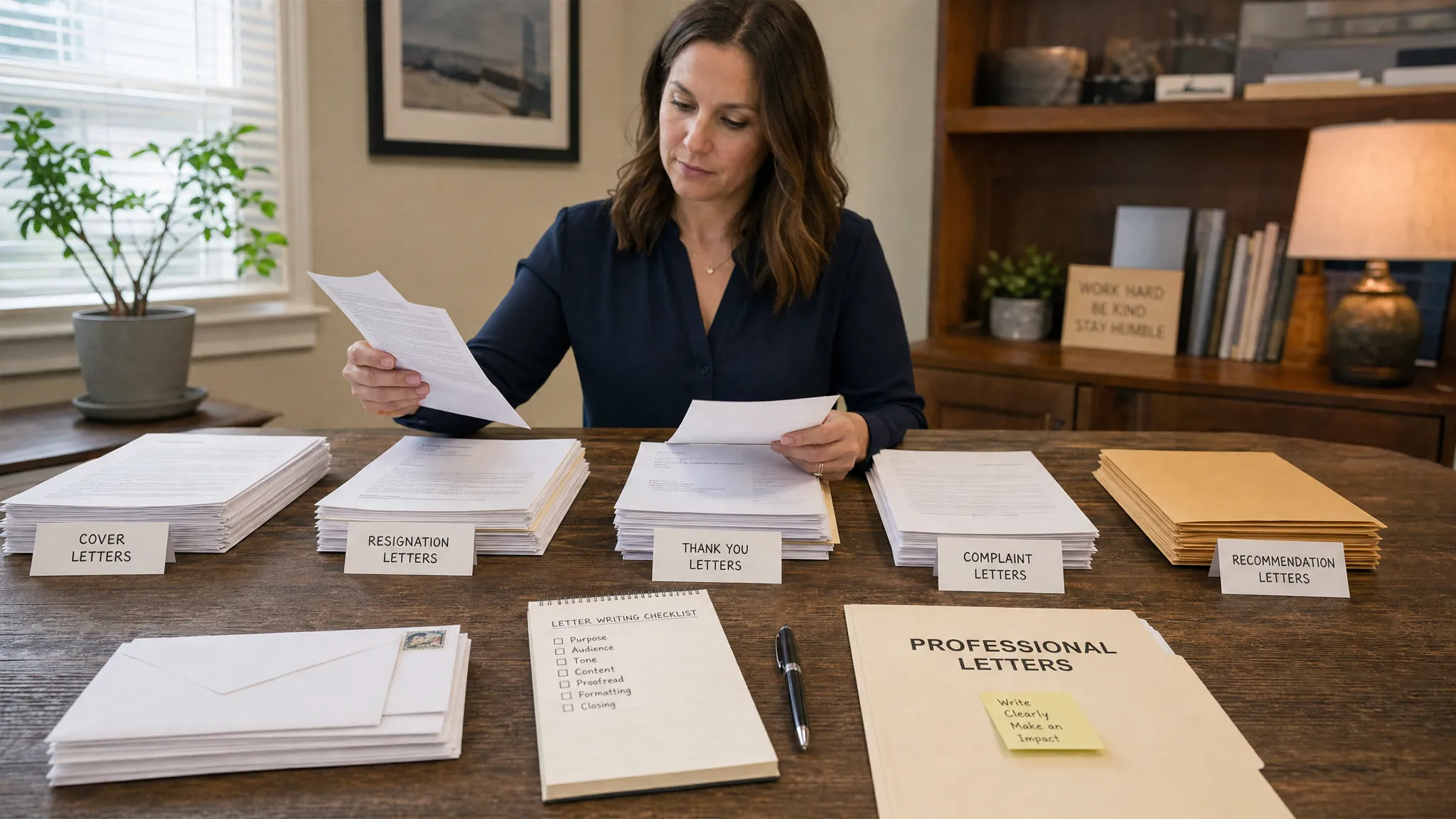
What a Professional Letter Writer Can Really Help With
See what a professional letter writer helps with, from cover letters to disputes, and when AI can create polished drafts fast.
Most people do not need prettier words. They need a letter that helps the reader understand the situation, trust the facts, and know exactly what to do next. That is where a professional letter writer can make a real difference.
Whether you are writing to a hiring manager, landlord, insurer, school committee, debt collector, client, or employer, the hard part is rarely grammar alone. The hard part is deciding what to include, what to leave out, how formal to sound, and how to ask for action without sounding weak, rude, or vague.
A good professional letter writer helps with strategy as much as wording. They turn scattered details into a clear, polished document with the right structure, tone, evidence, and request. In many cases, that is the difference between a letter that gets ignored and a letter that gets a serious response.
What a professional letter writer actually does
A professional letter writer does not simply make a draft sound more formal. The real value is judgment. They help you shape the letter around the reader, the situation, and the outcome you want.
The Purdue OWL guide to basic business letters emphasizes clarity, purpose, and audience in formal correspondence. That principle applies to almost every important letter, from a job application to a billing dispute. A well-written letter should make the reader’s next step obvious.
A professional letter writer typically helps with five things: defining the purpose, organizing the facts, matching the tone to the situation, making the request specific, and removing anything that weakens the message. The result is not just a nicer letter. It is a document that reduces confusion and makes it easier for the recipient to say yes, respond, investigate, approve, reconsider, or escalate.

The common problems a letter writer fixes
Many people start writing only after they are already stressed. Maybe an application deadline is close, a landlord has not replied, an insurance claim was denied, or a resignation conversation feels awkward. In those moments, it is easy to write too much, sound too emotional, or forget key details.
A professional letter writer helps prevent those mistakes before they weaken your case.
| Common letter problem | Why it hurts | How a professional letter writer helps |
|---|---|---|
| The request is vague | The reader does not know what action to take | Turns the request into a clear, specific next step |
| The tone is too emotional | The message can feel reactive or unprofessional | Keeps the wording calm, firm, and credible |
| The letter includes too much background | Important facts get buried | Prioritizes only the details that support the goal |
| Evidence is missing | The claim feels unsupported | Adds dates, amounts, examples, documents, or results where relevant |
| The structure feels random | The reader has to work too hard | Uses a logical beginning, middle, and close |
| The wording sounds generic | The letter could apply to anyone | Personalizes the draft to your situation and audience |
This is especially useful when the letter has consequences. A casual message to a friend can be imperfect. A letter asking for money back, explaining a career gap, requesting accommodation, or appealing a decision needs more care.
Career letters: getting noticed without sounding generic
Job seekers often think a professional letter writer only helps with cover letters. That is one use case, but career writing is much broader. You may need a job application letter, letter of intent, networking letter, thank you note after an interview, salary negotiation letter, resignation letter, or explanation of a layoff or employment gap.
For career letters, a writer helps connect your experience to the opportunity. Instead of repeating your resume, the letter should answer a sharper question: why are you a strong fit for this specific role, company, or moment?
A professional letter writer can help you choose the right proof points, shorten long career stories, and avoid generic claims like hard-working team player. They can also help you handle sensitive situations with care. For example, a layoff usually does not need a long explanation. A short, neutral sentence followed by relevant achievements is often stronger.
If you are working on employment documents, LetterCraft AI also has dedicated guides for topics like job application letters, cover letter structure, and salary negotiation letters.
Workplace letters: asking clearly while protecting relationships
Workplace letters often require a careful balance. You want to be direct, but you also want to preserve your professional reputation. This is true for resignation letters, work-from-home requests, leave requests, formal complaints, transfer requests, apology letters, and follow-up messages after difficult conversations.
A professional letter writer can help you sound respectful without becoming passive. For example, a work-from-home request should not only say that remote work would help you. It should show how the arrangement can still support business needs, communication, productivity, and accountability.
Resignation letters are another good example. Many people are tempted to explain everything that went wrong, especially after a frustrating job experience. A strong resignation letter does the opposite. It confirms the resignation, states the final working day, offers transition support if appropriate, and ends professionally.
In workplace writing, the goal is often not to win an argument. The goal is to create a written record that is clear, calm, and hard to misinterpret.
Complaints, disputes, and requests for action
A professional letter writer can be especially useful when money, services, rights, or deadlines are involved. Complaint letters, refund requests, billing disputes, insurance appeals, debt settlement letters, demand letters, and cease and desist letters all need precision.
These letters work best when they are factual. The reader should be able to see what happened, when it happened, why you are disputing it, what evidence you have, and what resolution you are requesting. The Consumer Financial Protection Bureau provides sample consumer letters for debt collection issues, which shows how important written records and clear requests can be in formal disputes.
A writer can help you avoid two extremes. One extreme is sounding too aggressive, which can make the recipient defensive. The other is sounding too vague, which makes your request easy to ignore. The strongest letters usually sit in the middle: firm, documented, specific, and professional.
For example, a billing dispute letter should include the account details, the disputed amount, the reason for the dispute, supporting documents, and the action you want. A demand letter should clearly explain the facts, the requested remedy, a reasonable deadline, and what may happen if the issue is not resolved. If you need a deeper walkthrough, see this guide on writing a demand letter.
Housing, academic, and personal letters
Not every important letter is career-related. A professional letter writer can also help with tenant letters, lease termination letters, maintenance requests, rent increase objections, scholarship applications, academic appeals, recommendation letters, immigration support letters, condolence letters, and formal apologies.
These letters often involve personal stakes. A tenant may need repairs completed. A student may need an academic decision reconsidered. A scholarship applicant may need to explain achievements and financial need without sounding entitled. A person writing a condolence letter may want to be sincere but worry about saying the wrong thing.
In these situations, the writer’s job is not to make the letter fancy. It is to make the message appropriate. The best letter for a scholarship committee is not the best letter for a landlord. The best letter for an apology is not the best letter for an insurance appeal. A professional writer understands that tone and structure must change depending on the audience.
| Situation | What a professional letter writer can improve | What you should provide |
|---|---|---|
| Cover letter or job application | Relevance, proof, concise motivation | Job posting, resume, achievements, company details |
| Resignation or workplace request | Professional tone and clear logistics | Dates, role, notice period, desired arrangement |
| Complaint or refund request | Factual timeline and specific resolution | Receipts, order numbers, prior messages, requested outcome |
| Billing or insurance dispute | Organized evidence and formal wording | Statements, claim numbers, denial letters, amounts |
| Tenant or housing letter | Clear issue, dates, and requested action | Lease terms, photos, notices, communication history |
| Scholarship or academic appeal | Personal story balanced with evidence | Program details, grades, circumstances, documents |
| Apology or condolence letter | Sincerity, restraint, and appropriate warmth | Relationship, context, what happened, desired tone |
What a professional letter writer cannot do
A professional letter writer can improve your message, but they cannot change the underlying facts. This distinction matters.
They cannot guarantee that an employer will interview you, a landlord will agree, an insurer will reverse a denial, or a creditor will accept a settlement. A strong letter improves clarity and credibility, but the decision still depends on policies, laws, evidence, timing, and the recipient’s discretion.
They also should not invent details. If a letter includes false achievements, fake hardship, inaccurate dates, or exaggerated claims, it may damage your credibility. A professional draft should make the truth clearer, not replace it with something convenient.
Finally, a letter writer is not a substitute for licensed professional advice in high-stakes matters. For legal disputes, immigration appeals, medical insurance issues, complex debt matters, or anything that could lead to court or regulatory action, a writer can help organize your words, but you may still need an attorney, accredited representative, financial counselor, or qualified professional.
Human writer, template, or AI professional letter writer?
There are several ways to get help with a letter. The best option depends on the stakes, complexity, budget, and timeline.
| Option | Best for | Main limitation |
|---|---|---|
| Static template | Simple letters with low risk | Can sound generic if not customized |
| Human professional writer | Complex, sensitive, or high-stakes letters | Usually slower and more expensive |
| General AI chatbot | Flexible drafting and brainstorming | Requires strong prompting and careful editing |
| Purpose-built AI letter generator | Fast, structured drafts for common scenarios | Still needs your review and accurate details |
A purpose-built AI professional letter writer is often the best fit when you know the facts but need help turning them into a polished draft quickly. Unlike a blank document or a generic chatbot prompt, a specialized letter tool can guide you through the specific details needed for that letter type.
That is the role LetterCraft AI is designed to fill. It helps users generate professional, personalized letters for 65+ scenarios in under 30 seconds. You enter the relevant details, choose the type of letter, adjust tone when needed, and receive a ready-to-review draft. Features like PDF export, copy to clipboard, letter history tracking, multiple tone options, and support for 5 languages make it practical for everyday professional writing.
If you want to see the broader range of possible formats, you can also browse this professional letter example library.
How to get the best result from any letter writer
The quality of the letter depends heavily on the quality of the information you provide. Even the best writer or AI tool cannot guess important facts that are missing.
Before you start, gather the essentials: who the letter is going to, what you want, why you are asking, what evidence supports your request, what tone is appropriate, and whether there is a deadline. A short, specific input almost always produces a stronger letter than a long, emotional explanation with no clear goal.
| Input to prepare | Why it matters | Example |
|---|---|---|
| Recipient | Sets the tone and level of formality | Hiring manager, landlord, professor, insurer |
| Desired outcome | Gives the letter a clear purpose | Refund, interview, repair, reconsideration, approval |
| Key facts | Builds credibility | Dates, amounts, names, policy numbers, job titles |
| Supporting evidence | Makes the request harder to dismiss | Receipts, screenshots, letters, records, photos |
| Tone preference | Prevents overcorrecting | Polite, firm, grateful, apologetic, persuasive |
| Deadline or next step | Creates momentum | Please respond by July 15 or I would welcome an interview |
After the draft is written, review it like the recipient would. Is the request obvious? Is anything unsupported? Does the tone match the relationship? Are names, dates, addresses, and amounts correct? If the letter could affect your legal, financial, academic, or employment status, take extra time to verify every detail.
When using a professional letter writer is worth it
You may not need help for every message. A short scheduling email does not require professional writing support. But a professional letter writer is worth considering when the letter carries real consequences or when you are too close to the situation to write objectively.
It is especially helpful when you are dealing with a formal process, asking for money or approval, trying to preserve a relationship, responding to a denial, explaining sensitive circumstances, or writing in a language or tone that is not your natural comfort zone.
In short, use a professional letter writer when the cost of a weak letter is higher than the effort of getting the letter right.
Frequently Asked Questions
Is a professional letter writer worth it? Yes, when the letter affects a job opportunity, refund, appeal, workplace relationship, housing issue, or formal request. The value is not just grammar. It is structure, tone, clarity, and knowing what information the reader needs to act.
Can AI replace a human professional letter writer? AI can replace many routine drafting tasks, especially when the letter follows a common structure. A human writer may still be better for highly complex, emotional, legal, or strategic situations. Many people use AI for the first draft, then edit or seek expert review if the stakes are high.
What details should I give a professional letter writer? Provide the recipient, your goal, key facts, dates, amounts, previous communication, supporting documents, desired tone, and any deadline. The more specific and accurate your input is, the stronger the final letter will be.
Can a professional letter writer help with legal letters? A writer can help organize and phrase letters such as demand letters, disputes, or cease and desist letters. However, they should not replace legal advice. For complex legal issues, court matters, immigration appeals, or major financial disputes, consult a qualified professional.
Will an AI-generated letter sound generic? It can if you provide generic input. To make it sound personal, include specific facts, real examples, names, dates, achievements, documents, or context. Always review the draft before sending.
How long should a professional letter be? Most professional letters should be as short as possible while still including the necessary facts. Many routine letters work well between 200 and 400 words. Complex appeals or disputes may need more detail, especially when evidence is involved.
Create a polished professional letter faster
If you know what you need to say but do not know how to structure it, LetterCraft AI can help you move from a blank page to a polished draft in under 30 seconds.
Choose from 65+ letter types, add your details, select the tone that fits your situation, then copy your letter or export it as a PDF. You can try it with no credit card required, and simple one-time pricing options are available when you need more letters.
Create your next professional letter with LetterCraft AI.