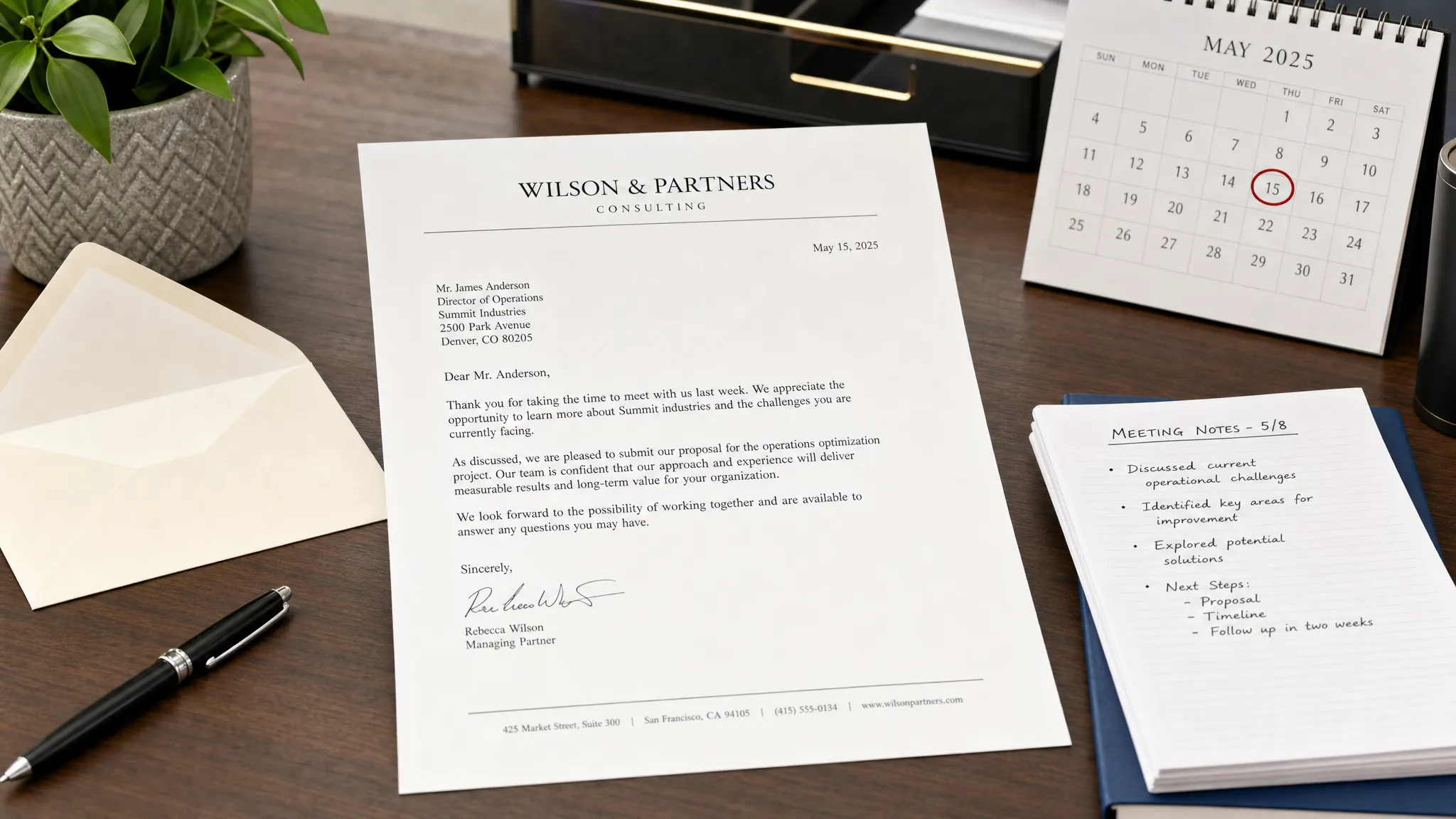
How to Write a Professional Letter to an Employer
Learn how to write a professional letter to an employer with the right format, tone, template, examples, and mistakes to avoid.
A professional letter to an employer is more than a formal message. It creates a written record, shows respect for the workplace, and helps you make your point clearly when the topic matters.
You might need one to request time off, ask for a schedule change, resign, raise a concern, follow up after a meeting, request a reference, or explain a personal situation. In each case, the goal is the same: sound polished, be specific, and make it easy for your employer to respond.
The good news is that most employer letters follow a simple structure. Once you understand the format, tone, and wording, you can adapt the same framework to almost any situation.
When should you write a professional letter to an employer?
Not every workplace message needs a formal letter. A quick Slack message or email may be enough for casual updates. But when your message affects your employment, schedule, pay, responsibilities, reputation, or documentation, a professional letter is usually the safer choice.
Common reasons to write one include:
- Requesting leave, remote work, a transfer, or a schedule change
- Resigning from a position or giving notice
- Asking for a promotion, raise, reference, or recommendation
- Documenting a workplace concern or complaint
- Following up after a performance review or disciplinary meeting
- Explaining an absence, delay, or personal circumstance
- Thanking an employer after an opportunity, interview, or support
A letter helps you slow down and choose your words carefully. It also gives your employer the context they need without forcing them to guess what you want.
If your situation is more general and you simply need a polished structure, you may also find this guide on writing a simple letter that still feels professional useful.
The best format for a professional employer letter
A letter to an employer should be easy to scan. Managers and HR teams are often busy, so the strongest letters are clear, direct, and respectful rather than long or overly emotional.
For a formal printed or PDF letter, use a standard business letter format. Purdue OWL’s guide to basic business letters is a useful reference if you want to follow traditional formatting rules.
For most employer letters, include these parts:
| Section | What to include | Example |
|---|---|---|
| Your information | Name, address, phone, email if sending a formal letter | Jordan Lee, jordan@email.com |
| Date | The date you send the letter | June 30, 2026 |
| Employer information | Manager or HR name, title, company, address if applicable | Ms. Rivera, HR Manager |
| Subject line | A short phrase naming the purpose | Request for Schedule Adjustment |
| Greeting | A professional salutation | Dear Ms. Rivera, |
| Opening | State why you are writing | I am writing to request... |
| Body | Explain the context and key details | Due to a change in my childcare schedule... |
| Request or next step | Make the action clear | I would appreciate the opportunity to discuss... |
| Closing | Thank them and sign off | Sincerely, Jordan Lee |
If you are sending the letter by email, you can simplify the top section. Use a clear email subject line, start with the greeting, and include your contact details in your email signature.
Step 1: Start with a clear purpose
Before you write, answer one question: what do you want your employer to understand or do after reading this letter?
A professional letter should not make the reader search for the main point. State your purpose in the first paragraph, ideally in the first or second sentence.
Strong openings include:
- “I am writing to formally request a change to my work schedule beginning July 15.”
- “Please accept this letter as my formal notice of resignation from my position as Marketing Coordinator.”
- “I am writing to follow up on our meeting regarding my performance goals for the next quarter.”
- “I would like to request a meeting to discuss my current responsibilities and compensation.”
Weak openings are vague or overly dramatic. Avoid starting with a long backstory, frustration, or apology before explaining the reason for the letter. Your employer should know the purpose immediately.
Step 2: Use a respectful, confident tone
Professional does not mean cold. The best tone is calm, courteous, and specific. You can be firm without sounding hostile, and you can be warm without sounding too casual.
Match your tone to the situation:
| Situation | Best tone | Avoid |
|---|---|---|
| Resignation | Grateful, concise, final | Overexplaining or criticizing the company |
| Request | Respectful, practical, flexible | Demanding language |
| Complaint | Factual, calm, documented | Insults, threats, emotional exaggeration |
| Promotion or raise | Confident, evidence-based | Entitlement or vague claims |
| Apology or explanation | Accountable, brief, solution-focused | Excuses or excessive self-blame |
For workplace letters, avoid slang, sarcasm, accusations, and emotional language that could be misread. Instead of “This situation is completely unfair,” write, “I would like to discuss my concerns regarding the recent schedule change and its impact on my availability.”
If you want to sound polished without becoming stiff, this related guide on writing a job formal letter without sounding robotic offers useful tone examples.
Step 3: Give the right amount of context
Your employer needs enough background to understand the request, but not every personal detail belongs in the letter. Keep the context relevant to the workplace decision.
For example, if you are requesting leave, include the dates, the type of leave if appropriate, and whether you have prepared a handoff plan. You do not need to include private medical details unless required by company policy or advised by HR.
If you are documenting a concern, include facts such as dates, times, people involved, previous conversations, and the impact on your work. Avoid speculation about motives. A factual letter is easier for an employer to act on and harder to dismiss as emotional.
A helpful rule is to include details that answer these questions:
- What happened or what are you requesting?
- When did it happen or when should it begin?
- Who is involved?
- Why does it matter for your work?
- What outcome or next step are you asking for?
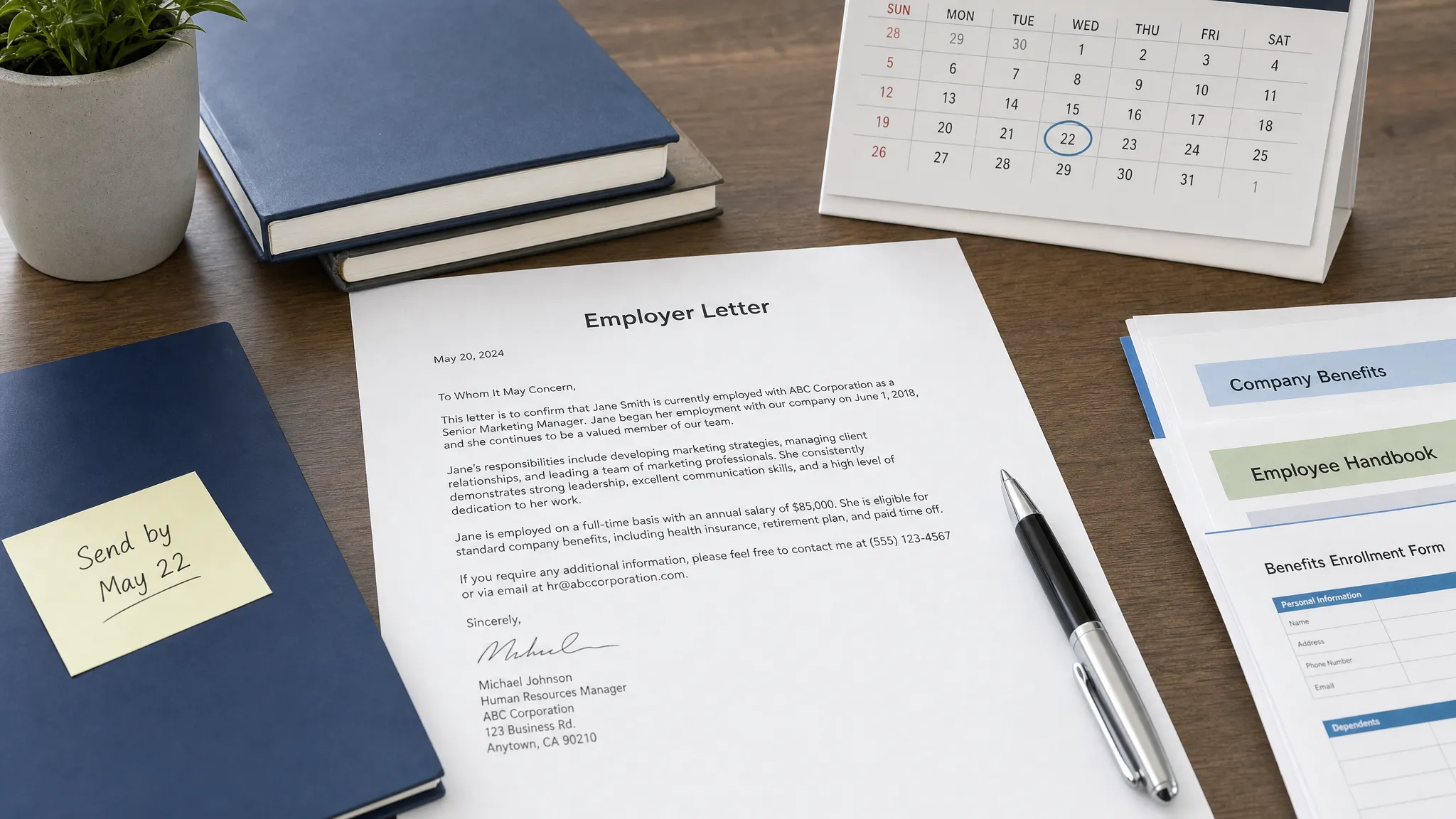
Step 4: Make your request or next step unmistakable
Many letters fail because they explain the situation but never clearly ask for anything. If you need a response, meeting, approval, record update, or written confirmation, say so directly.
Examples:
- “I would appreciate written confirmation once my final working day has been recorded.”
- “Please let me know if we can schedule a meeting this week to discuss possible options.”
- “I am requesting approval to work remotely on Fridays for the next eight weeks.”
- “I would be grateful if you could provide a letter of recommendation by August 10.”
If you are making a request, it often helps to show flexibility. For example, “I am open to discussing an alternative schedule that meets the team’s coverage needs” sounds more collaborative than “This is the only schedule I can work.”
Step 5: Close with appreciation and professionalism
The closing should be short. Thank the employer for their time, restate your willingness to discuss the matter if needed, and sign off professionally.
Good closing lines include:
- “Thank you for your time and consideration.”
- “I appreciate your attention to this matter and look forward to your response.”
- “Thank you for the opportunity to contribute to the team.”
- “Please let me know if you need any additional information from me.”
Use a standard sign-off such as “Sincerely,” “Respectfully,” or “Best regards.” For sensitive or formal matters, “Sincerely” is usually the safest choice.
Professional letter to employer template
Use this template as a starting point. Adjust the details, tone, and length based on your situation.
[Your Name]
[Your Address, optional]
[Your Phone Number]
[Your Email Address]

[Date]

[Employer or Manager Name]
[Title]
[Company Name]
[Company Address, optional]

Subject: [Brief subject of your letter]

Dear [Manager or Employer Name],

I am writing to [state the purpose of your letter clearly]. I would like to [make your request, give notice, document a concern, or explain the situation].

[Provide the most relevant context. Include dates, details, and any important background information. Keep this paragraph factual and focused on the workplace impact.]

[State your requested next step. If appropriate, mention your willingness to discuss options, provide documentation, or help with a transition plan.]

Thank you for your time and consideration. Please let me know if you need any additional information.

Sincerely,

[Your Name]
This structure works for many workplace situations because it keeps the letter organized and direct. You can make it warmer for a thank-you note, firmer for a complaint, or more concise for a resignation.
Example: request letter to an employer
Here is a sample letter for a schedule adjustment. Notice how it gives context without oversharing and ends with a clear next step.
Subject: Request for Schedule Adjustment

Dear Ms. Carter,

I am writing to request a temporary adjustment to my work schedule beginning July 15 and continuing through September 6.

Due to a change in my family’s childcare arrangements, I would like to request a shift from 8:00 a.m. to 4:00 p.m. instead of my current 9:00 a.m. to 5:00 p.m. schedule during this period. I believe this adjustment would allow me to maintain my current responsibilities while continuing to meet team deadlines and client needs.

I am happy to discuss other options if a different arrangement would better support the department’s coverage needs. Please let me know if we can schedule a time this week to review the request.

Thank you for your time and consideration.

Sincerely,

Jordan Lee
Example: resignation letter to an employer
A resignation letter should be brief, professional, and clear. You do not need to explain every reason for leaving.
Subject: Resignation Notice

Dear Mr. Patel,

Please accept this letter as my formal notice of resignation from my position as Account Coordinator at Brightline Media. My final working day will be July 24, 2026.

I appreciate the opportunities I have had to learn and contribute during my time with the company. Over the next few weeks, I will do my best to support a smooth transition and complete any outstanding work.

Thank you again for the opportunity to be part of the team. I wish the company continued success.

Sincerely,

Alex Morgan
If you need more examples across different situations, the professional letter example library includes copy-ready samples you can adapt.
What to avoid in a letter to your employer
Even a valid request can lose impact if the wording feels careless or confrontational. Before sending, check for these common mistakes.
Avoid writing when you are angry. Draft the message, step away, and review it later. If the issue is sensitive, ask yourself how the letter would sound if it were forwarded to HR or read in a formal meeting.
Avoid vague claims. Instead of “I always do more than everyone else,” use measurable examples, such as “Over the past six months, I have managed three additional client accounts while maintaining the same response time targets.”
Avoid making threats. If you need to reference policy, documentation, or a formal process, do so calmly. For serious issues involving discrimination, harassment, safety, wages, or legal rights, consider reviewing company policy and seeking qualified guidance before sending.
Avoid overly long letters. Most employer letters should fit on one page or within a short email. If the situation requires documentation, attach supporting materials or offer to provide them.
Final checklist before you send
Before you email, print, or export your letter, review it for clarity and professionalism.
- Is the purpose clear in the first paragraph?
- Did you include the key dates, names, and details?
- Is the tone respectful, even if the topic is difficult?
- Did you make a specific request or next step?
- Have you removed unnecessary personal details?
- Did you proofread names, titles, dates, and attachments?
- Is the subject line clear if sending by email?
If the letter could affect your employment record, save a copy for yourself. For formal matters, PDF format can help preserve the layout and make the document easier to file.
Frequently Asked Questions
How long should a professional letter to an employer be? Most employer letters should be three to five short paragraphs. The goal is to be complete but concise. If the issue is complex, summarize the main points in the letter and offer to provide supporting documentation.
Should I send the letter by email or as a PDF? Email is usually fine for everyday workplace requests. A PDF is useful for formal letters, resignation notices, HR documentation, or situations where you want the formatting preserved.
Can I be direct without sounding rude? Yes. Use clear phrases like “I am requesting,” “I would like to discuss,” or “Please confirm.” Direct language sounds professional when it is paired with a respectful tone and relevant context.
What if I do not know the employer’s name? Use the person’s title if you know it, such as “Dear Human Resources Manager.” If the letter is going to a general HR inbox, “Dear HR Team” is acceptable.
Should I mention company policy in my letter? If a policy is relevant, mention it briefly and accurately. For example, “In accordance with the company’s leave policy, I am submitting this request two weeks in advance.” Avoid quoting policy unless you are sure the wording is correct.
Write your employer letter faster with LetterCraft AI
A professional letter can take time to get right, especially when the topic is sensitive. If you want a polished draft without staring at a blank page, LetterCraft AI can help you generate personalized letters in under 30 seconds.
You can choose from 65+ letter types, adjust the tone, copy your letter, export it as a PDF, and keep track of your letter history. It is free to try with no credit card required, making it a practical option when you need a professional letter to your employer quickly and confidently.