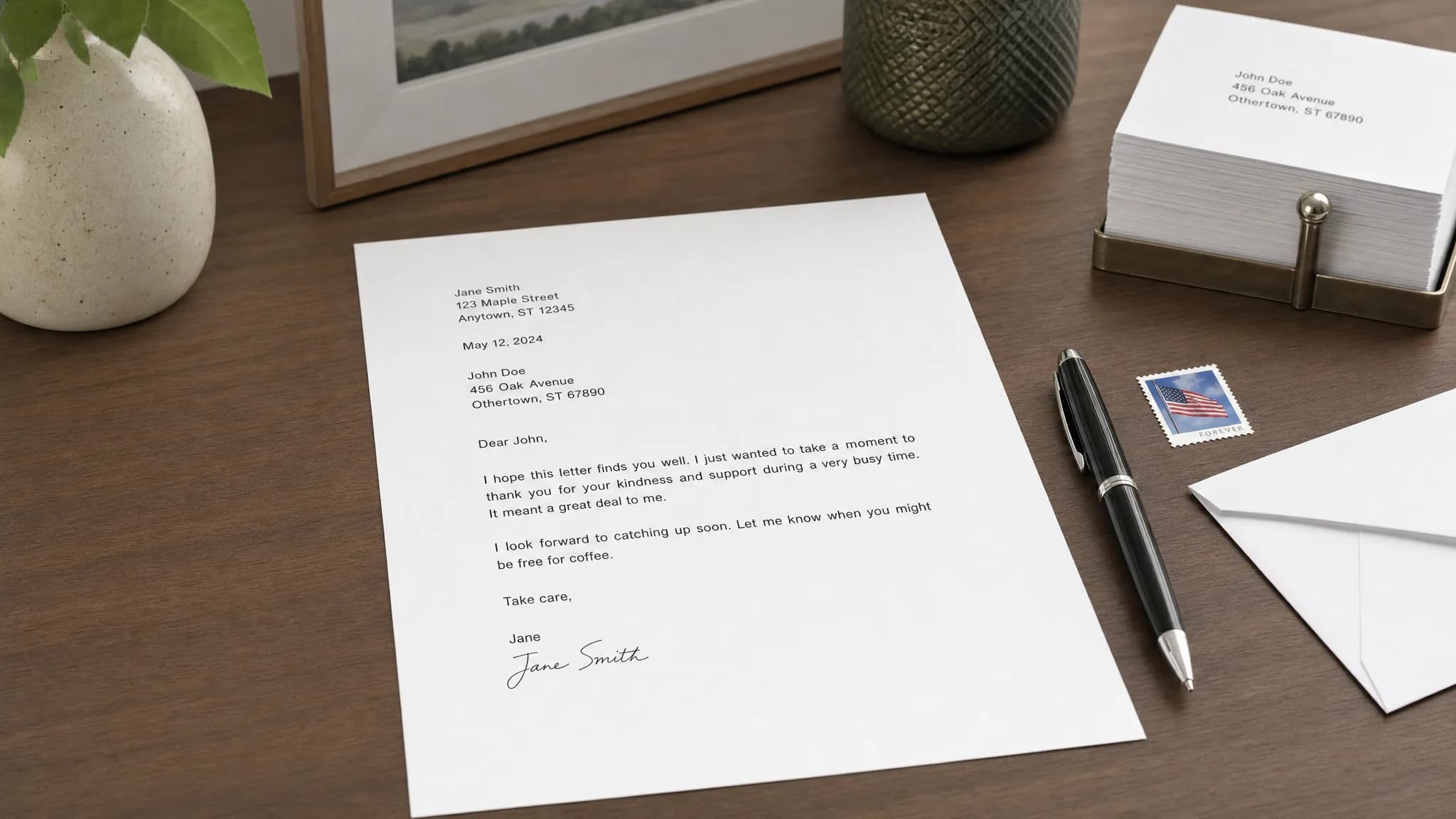
How to Write a Simple Letter That Still Feels Professional
Learn how to write a simple letter that sounds professional, with format tips, phrase swaps, templates, examples, and a quick checklist.
Writing a simple letter can feel harder than writing a long one. When you only have a few paragraphs, every sentence has to do useful work. The goal is not to sound fancy. The goal is to sound clear, respectful, and easy to respond to.
A professional simple letter has one job: help the reader understand what you want, why it matters, and what should happen next. That applies whether you are requesting a document, following up after a conversation, asking for help, making a complaint, or sending a short formal notice.
The good news is that most professional letters follow the same basic pattern. Once you learn that pattern, you can write a polished simple letter in minutes.
What makes a simple letter professional?
Professionalism is not about using complicated language. In fact, clear writing often feels more professional because it respects the reader's time. PlainLanguage.gov emphasizes writing for the audience, organizing information clearly, and using familiar words. Those same principles work perfectly for letters.
A simple letter feels professional when it is specific, courteous, and complete. It should not ramble, but it also should not be so short that the reader has to guess what you mean.
| Professional quality | What it means | Example |
|---|---|---|
| Clear purpose | The reader knows why you are writing within the first few lines | I am writing to request a copy of my employment verification letter. |
| Polite tone | The letter is respectful, even if the topic is frustrating | I would appreciate your help resolving this issue. |
| Relevant context | You include only the details needed to understand the request | My account number is 48291, and the charge appeared on May 14. |
| Specific next step | The reader knows what action to take | Please send the updated document by Friday, if possible. |
| Clean format | The letter is easy to scan and looks intentional | Short paragraphs, consistent spacing, and a professional closing. |
A simple letter should feel calm and organized. If the reader has to search for the point, the letter is too cluttered. If the reader does not know what to do next, the letter is too vague.
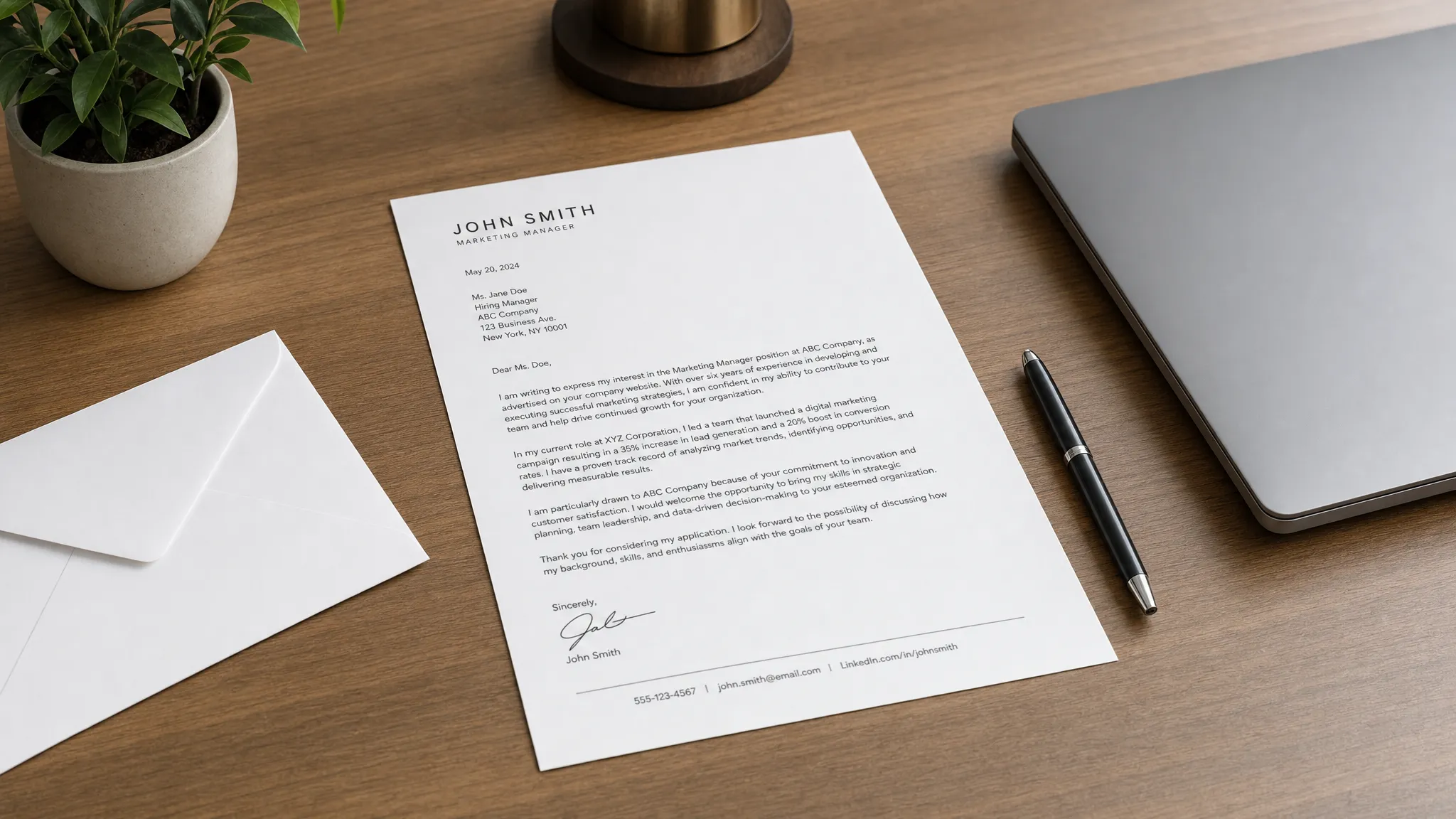
The simple letter format to use
Most formal and professional letters use a predictable structure. The Purdue OWL guide to basic business letters explains the traditional business letter format, including sender information, date, recipient information, salutation, body, closing, and signature.
For everyday professional communication, you can simplify that structure without making the letter look careless. The format below works for emails, printed letters, PDF attachments, and copy-paste messages.
| Section | What to include | Simple example |
|---|---|---|
| Subject line or heading | A short label that explains the topic | Request for Updated Invoice |
| Greeting | A respectful opening | Dear Ms. Johnson, |
| Opening sentence | The reason you are writing | I am writing to follow up on my refund request submitted on May 10. |
| Context | One to three details the reader needs | The order number is 84722, and the item was returned on May 12. |
| Request or action | The specific outcome you want | Please confirm when the refund will be processed. |
| Closing | A polite final line and sign-off | Thank you for your time and assistance. Sincerely, Maya Chen |
If you are sending an email, the subject line becomes especially important. A clear subject line helps your message get opened, forwarded, and filed correctly. For printed letters or PDF attachments, include your contact details and the date at the top.
Simple letter template you can copy
Use this template when you need a short, professional letter but do not want to overthink the structure.
[Your Name]
[Your Address or Email]
[City, State, ZIP]
[Date]

[Recipient Name]
[Recipient Title or Department]
[Company or Organization]
[Address, if sending a printed letter]

Subject: [Brief description of the letter]

Dear [Recipient Name],

I am writing to [state your purpose clearly].

[Add the key context the reader needs. Include dates, account numbers, order numbers, names, or previous conversations if relevant. Keep this section short and factual.]

I would appreciate it if you could [state the action you want]. If possible, please [include a deadline or preferred next step].

Thank you for your time and assistance. Please let me know if you need any additional information.

Sincerely,
[Your Name]
[Phone Number, if helpful]
[Email Address, if helpful]
For email, you can remove the address block and begin with the greeting. Keep the subject line, because it gives the reader instant context.
How to write a simple letter in five steps
A professional letter does not need to be long. It needs to be intentional. Use these five steps whenever you are starting from a blank page.
- Start with the purpose: Do not begin with a long backstory. A direct first sentence makes the letter easier to read. Try: I am writing to request, I am following up about, or I would like to confirm.
- Add only the necessary context: Include the details that help the reader understand the situation, such as dates, names, reference numbers, documents, or previous communication. Leave out emotional commentary unless it is truly relevant.
- Make one clear request: A simple letter works best when it has one main action. If you need several things, group them into one sentence or consider using a more detailed formal request format.
- Use a respectful tone: Professional tone means firm, calm, and courteous. You can be direct without sounding rude, and you can be polite without sounding weak.
- Close with the next step: End by telling the reader what you hope will happen next. A deadline, response request, or offer to provide more information makes the letter easier to act on.
After drafting, read your letter once as the sender and once as the recipient. If you were receiving the letter, would you know what to do next? If not, revise the request.
Phrase swaps that make a simple letter sound polished
Small wording changes can make a big difference. The best professional letters avoid both extremes: overly casual language and overly stiff language.
| Instead of this | Avoid this too | Use this simple professional version |
|---|---|---|
| Hey, I need this ASAP | I demand your immediate compliance | I would appreciate your response by [date]. |
| Just checking if you got this | I am writing to ascertain receipt | I am following up to confirm whether you received my previous message. |
| This is really annoying | This matter has caused extreme inconvenience | I would appreciate your help resolving this issue. |
| Send it to me | Kindly furnish the requested documentation | Please send the document when you have a chance. |
| Sorry to bother you | I apologize for the intrusion | Thank you for your time. |
| Let me know | Revert at your earliest convenience | Please let me know if you need any additional information. |
The middle column is a common trap. Many people try to sound professional by using formal phrases they would never say in real life. A better approach is to use plain, respectful language that sounds natural.
Simple letter examples for common situations
Below are three short examples you can adapt. Notice that each one uses the same structure: purpose, context, request, close.
Example 1: Simple request letter
Subject: Request for Copy of Lease Agreement

Dear Ms. Rivera,

I hope you are well. I am writing to request a copy of my current lease agreement for the apartment at [property address].

I need the document for my personal records and would appreciate receiving a PDF copy if available.

Please let me know if you need any additional information from me. Thank you for your help.

Sincerely,
[Your Name]
This works because it is direct and easy to fulfill. The recipient knows exactly which document is being requested and how to send it.
Example 2: Simple complaint letter
Subject: Request for Resolution of Incorrect Charge

Dear Customer Support Team,

I am writing about an incorrect charge of [amount] on my account dated [date]. My account number is [account number].

Based on my records, this charge does not match the service I received. I have attached a copy of the statement and the related receipt for your review.

Please review the charge and let me know whether it can be corrected or refunded. I would appreciate a response by [date].

Thank you for your assistance.

Sincerely,
[Your Name]
This letter stays professional because it focuses on facts, not frustration. It also includes a clear request and supporting documentation.
Example 3: Simple follow-up letter
Subject: Follow-Up on Meeting Request

Dear Mr. Patel,

I am following up on my message from [date] regarding a meeting to discuss [topic].

I understand your schedule may be busy, so I would be happy to work around your availability. If helpful, I am available on [option 1] or [option 2].

Please let me know whether either time works for you. Thank you for your consideration.

Best regards,
[Your Name]
This example is short, but it still feels professional because it is courteous, specific, and easy to answer.
Email vs. printed letter: what changes?
The content of your letter can stay mostly the same, but the formatting should change depending on how you send it.
| Format | Best for | What to include |
|---|---|---|
| Email body | Quick requests, follow-ups, routine workplace communication | Clear subject line, greeting, short body, sign-off, contact details in signature |
| PDF attachment | Formal requests, applications, notices, official documentation | Full letter format, date, recipient details, signature, clean file name |
| Printed letter | Legal, housing, financial, or sensitive matters where delivery records matter | Full address block, date, signature, copies of supporting documents |
| Copy-paste message | Portals, forms, customer support systems | Short subject or opening line, facts, request, contact information |
If the situation is routine, email is usually enough. If the situation involves money, housing, employment records, legal rights, or a dispute, a PDF or printed letter may create a clearer record.
For more formal request layouts, you can also use this free letter format template for formal requests.
Common mistakes that make a simple letter seem unprofessional
A simple letter can lose credibility quickly if the writing feels rushed or unclear. Watch for these common issues before you send it.
- Burying the main point after a long introduction.
- Using vague phrases like as soon as possible without a real deadline.
- Including too many unrelated details.
- Sounding angry, sarcastic, or overly emotional.
- Forgetting key identifiers such as account numbers, dates, order numbers, or names.
- Asking for several different outcomes in one short letter.
- Skipping proofreading because the letter is brief.
The easiest fix is to cut anything the reader does not need in order to respond. Then add any missing information that would prevent delays.
When a simple letter is not enough
A simple letter is ideal for everyday professional situations. It is not always enough for high-stakes matters.
If your letter involves a legal demand, immigration appeal, insurance denial, medical billing dispute, debt settlement, or employment dispute, the same clear structure still helps. However, you may need more evidence, specific legal language, deadlines, attachments, or professional advice. In those cases, a specialized template can reduce mistakes.
If you want examples across different situations, browse the Letter Example Library for ready-to-adapt professional letters.
Quick professional letter checklist
Before sending your letter, use this final review table.
| Check | Question to ask |
|---|---|
| Purpose | Is the reason for writing clear in the first paragraph? |
| Context | Did I include the details the reader needs to act? |
| Tone | Does the letter sound respectful and calm? |
| Request | Did I ask for one clear action or response? |
| Deadline | Did I include a date if timing matters? |
| Format | Is the letter easy to scan, with short paragraphs? |
| Proofreading | Did I check names, dates, amounts, and attachments? |
If every answer is yes, your letter is probably ready to send.
Frequently Asked Questions
How long should a simple letter be? Most simple professional letters should be between 100 and 250 words. If the situation is complex, it can be longer, but every paragraph should have a clear purpose.
Can a simple letter be sent by email? Yes. Many professional letters are now sent by email. Use a clear subject line, keep the body concise, and include your contact information in your signature.
What is the best opening sentence for a simple letter? A strong opening sentence states the purpose directly. For example: I am writing to request a copy of my records, or I am following up regarding my application submitted on [date].
How do I sound professional without sounding too formal? Use plain language, short sentences, and polite phrasing. Avoid slang, sarcasm, and unnecessary jargon. The best tone is calm, clear, and respectful.
Should I use a template for a simple letter? Yes, as long as you personalize it. A template gives you structure, but you should add the correct names, dates, context, and request so the letter does not feel generic.
Create a polished simple letter faster
If you know what you want to say but do not want to fight with formatting, LetterCraft AI can help you generate a professional letter in under 30 seconds. Choose from 65+ letter types, add a few details, select the tone you want, and get a ready-to-send draft you can copy, export as a PDF, or save in your letter history.
LetterCraft AI supports 5 languages, requires no credit card to try, and offers simple one-time pricing options instead of subscriptions. You can also read the AI letter generator guide to see how it works before creating your next letter.