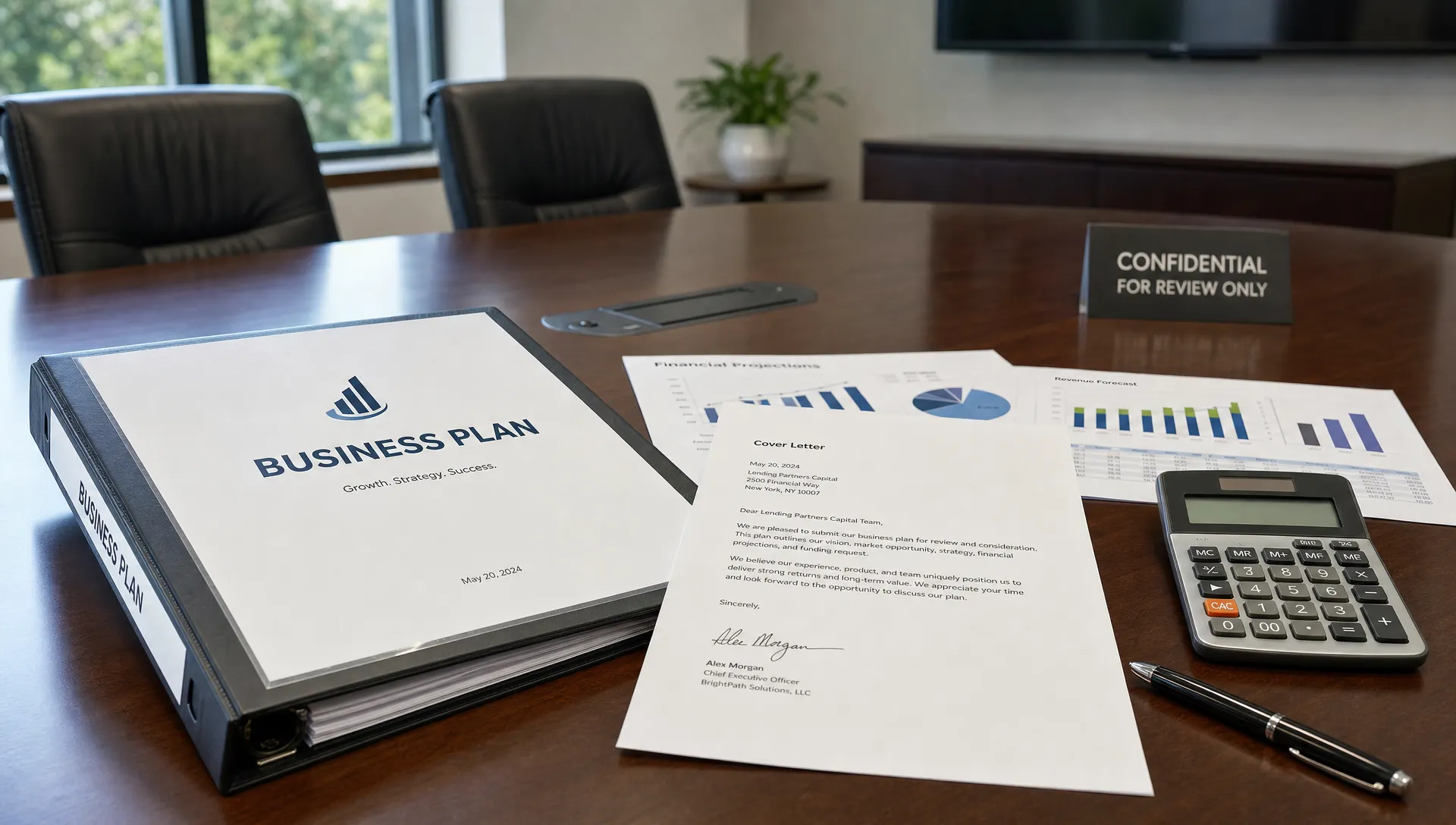
How to Build a Cover Letter for a Business Plan
Learn how to build a cover letter for a business plan with the right structure, tone, template, and examples for lenders or investors.
Write your cover letter — not a blank template
Generate a finished cover letter with your details, tone, and language in ~30 seconds. Free first letter, no credit card — beats copy-pasting and filling the blanks yourself.
A business plan may contain the strategy, numbers, market research, and operating details. But the cover letter is often the first thing a lender, investor, partner, landlord, or grant committee reads. Its job is simple: introduce the plan, explain why you are sending it, and make the next step easy.
A strong cover letter for a business plan is not a mini business plan. It should not repeat every financial projection or product feature. Instead, it acts as a professional bridge between the recipient and the full document, giving just enough context to make the plan worth reviewing.
If you are preparing to send your plan for funding, approval, partnership, or evaluation, here is how to build a focused, credible, and persuasive cover letter.
What a Business Plan Cover Letter Should Do
The purpose of a business plan cover letter depends on who will read it. A bank loan officer is looking for a clear request and repayment confidence. An investor wants to understand opportunity and fit. A potential partner wants to see professionalism, alignment, and reliability.
In all cases, the letter should answer four questions quickly:
- Who are you and what business are you representing?
- Why are you sending the business plan?
- What action do you want the recipient to take?
- Why should the recipient take your request seriously?
The U.S. Small Business Administration explains that a business plan helps guide your company and communicate its value to outside stakeholders. Your cover letter supports that same goal, but in a more direct and personal format.
Think of it as the business version of a first impression. It should be clear, courteous, specific, and easy to act on.
Cover Letter vs. Executive Summary vs. Cover Page
Before writing, it helps to understand what the cover letter is not.
A cover page is the front page of the business plan itself. It usually includes the company name, logo, contact details, date, and document title.
An executive summary is part of the business plan. It summarizes the opportunity, business model, target market, competitive position, team, and financial highlights.
A cover letter is a separate communication. It introduces the attached or enclosed plan to a specific recipient and explains the reason for sending it. If you email your business plan, the cover letter may be the body of the email or an attached letter.
The most common mistake is turning the cover letter into a second executive summary. You only need enough detail to frame the document and request a next step.
What to Gather Before You Start Writing
A focused letter starts with the right information. Before drafting, collect the details that make the letter specific instead of generic.
You should know the recipient’s name, title, organization, and reason for reviewing the business plan. You should also be clear about your own request. Are you asking for a loan, an equity investment, a grant review, a lease, a supplier relationship, or a strategic partnership?
If funding is involved, decide whether to include the exact amount. In most lender and investor situations, you should. For example, “We are requesting a $150,000 working capital loan” is more useful than “We are seeking financial support.”
You should also identify one or two proof points that support your credibility. These could include operating history, founder experience, early revenue, signed contracts, waitlist demand, professional certifications, or a clear market need. Do not overload the letter with evidence. Save the detail for the plan.
The Core Structure of a Business Plan Cover Letter
A business plan cover letter should usually fit on one page. For email, aim for three to five short paragraphs. For a printed or PDF letter, use a standard business letter format with your contact details, the date, recipient information, salutation, body, and signature.
| Section | Purpose | What to Include |
|---|---|---|
| Header | Identifies sender and recipient | Your name, company, contact details, date, recipient details |
| Opening | Explains why you are writing | The business name, attached plan, and reason for submission |
| Business snapshot | Gives quick context | What the business does, who it serves, and where it operates |
| Request | States the desired action | Funding amount, meeting request, review, approval, or partnership discussion |
| Credibility | Builds confidence | One or two relevant proof points, not a full pitch |
| Closing | Makes response easy | Availability, contact details, appreciation, and professional signoff |
If you need a deeper refresher on spacing, layout, and section order, this guide on how to format a cover business letter correctly can help you polish the final version.
Step-by-Step: How to Build the Letter
Start with the recipient, not your business. The strongest letters are written for a specific reader. A generic “To whom it may concern” letter can work only when you truly do not have a contact name, but a named salutation is better whenever possible.
Then open with the purpose of the letter. Do not make the reader search for the reason you are writing. Mention the attached business plan in the first paragraph and explain what you are asking for.
Next, summarize the business in one or two sentences. This is not the place for a long origin story. A clear sentence such as “Greenline Café is a neighborhood breakfast and lunch concept serving commuters and remote workers in downtown Madison” gives the reader immediate context.
After that, connect your request to the recipient’s priorities. For a lender, emphasize responsible use of funds, repayment ability, and stability. For an investor, emphasize market opportunity, traction, team, and growth potential. For a partner, emphasize fit, reliability, and mutual benefit.
Finally, close with a specific next step. Ask for a meeting, confirm your availability, or invite the recipient to contact you with questions. A business plan cover letter should never end vaguely.
How the Letter Changes by Recipient
The same business plan may be sent to different people, but the cover letter should change based on the audience. You do not need to rewrite everything, but you should adjust the emphasis.
| Recipient | Emphasize | Avoid |
|---|---|---|
| Bank or lender | Loan amount, use of funds, repayment confidence, operating history | Hype, vague revenue claims, unsupported growth language |
| Investor | Market opportunity, traction, team strength, scalability | Overly conservative language that hides upside |
| Grant committee | Eligibility, community benefit, measurable impact, mission fit | Generic claims that do not match the grant criteria |
| Landlord | Stability, business concept, lease readiness, customer fit for the location | Too much financial detail that is not relevant to the lease decision |
| Strategic partner | Mutual benefit, audience overlap, operational reliability | A one-sided pitch focused only on what you need |
This is where many entrepreneurs weaken their letters. They write one version and send it everywhere. A better approach is to keep the same core message but tailor the opening, proof point, and request.
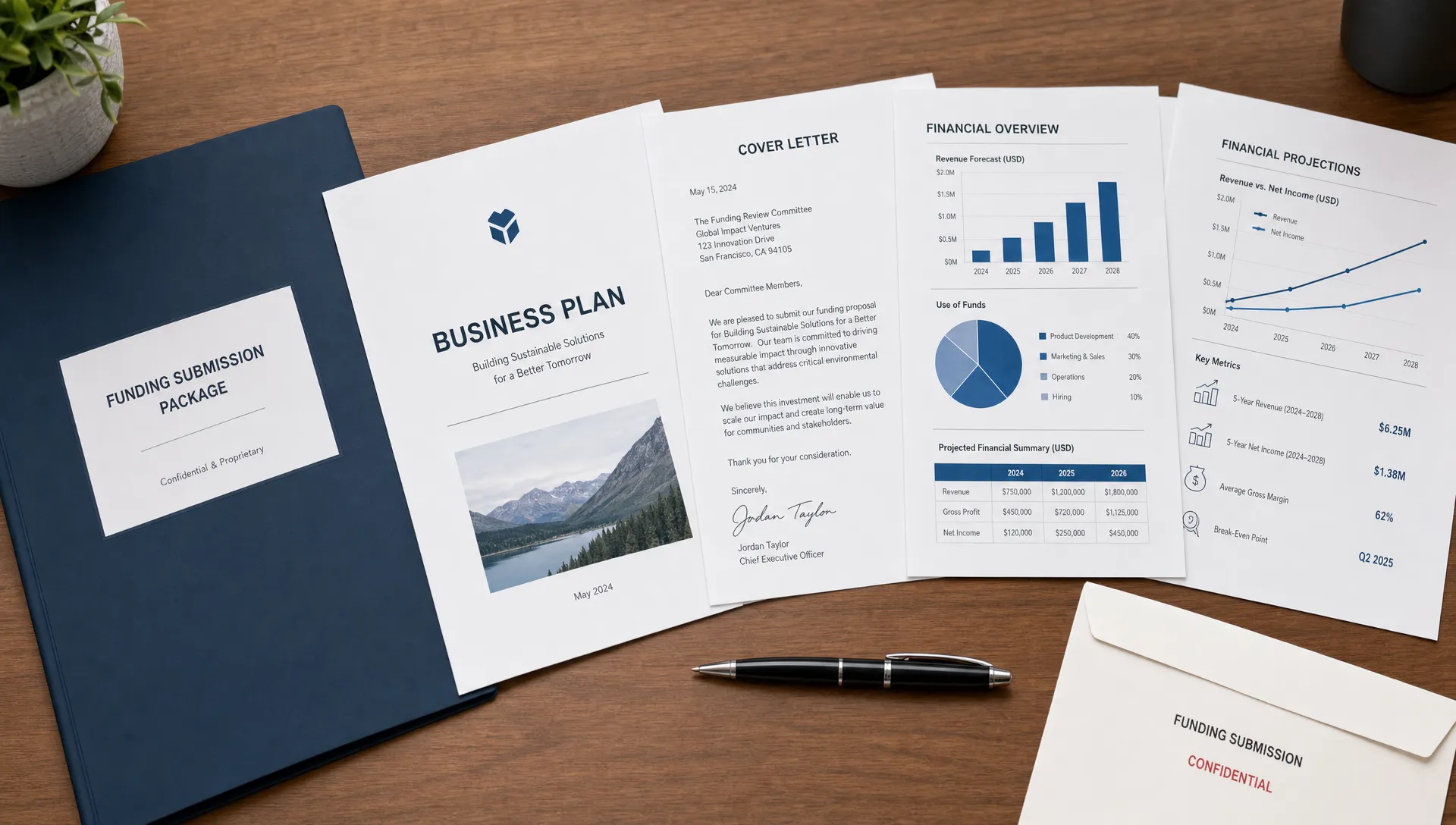
Copy-Ready Business Plan Cover Letter Template
Use this template as a starting point. Replace every placeholder with specific information, and keep the tone professional rather than overly promotional.
[Your Name]
[Your Title]
[Business Name]
[Phone Number]
[Email Address]
[Business Address]

[Date]

[Recipient Name]
[Recipient Title]
[Organization Name]
[Organization Address]

Dear [Recipient Name],

I am pleased to submit the attached business plan for [Business Name], a [brief description of the business] serving [target customers or market]. I am contacting you to request [loan review, investment consideration, partnership discussion, grant evaluation, lease consideration, or other specific purpose].

The business plan outlines our market opportunity, operating strategy, management background, financial projections, and planned use of funds. We are seeking [specific amount or type of support, if applicable] to [briefly explain intended use], and we believe this plan provides the information needed to evaluate the opportunity.

[Business Name] is well positioned because [include one or two credibility points, such as founder experience, early traction, customer demand, signed agreements, location advantage, or relevant certifications]. I would welcome the opportunity to discuss the plan with you and answer any questions.

Thank you for your time and consideration. I am available at [phone number] or [email address] and would be glad to schedule a conversation at your convenience.

Sincerely,

[Your Name]
[Your Title]
The template is intentionally concise. If the recipient needs more detail, they will find it in the business plan. The cover letter’s role is to create clarity, not to replace the plan.
Fictional Example: Cover Letter for a Business Plan Loan Request
Here is a simple example for a small business owner submitting a plan to a community bank. The details are fictional, but the structure is practical.
Maria Lopez
Founder and Managing Director
Northside Family Dental Studio
maria@northsidedental.example
(555) 014-7821

July 4, 2026

James Carter
Small Business Lending Manager
Community First Bank

Dear Mr. Carter,

I am pleased to submit the attached business plan for Northside Family Dental Studio, a family-focused dental practice planned for the Northside neighborhood of Columbus, Ohio. I am writing to request review of our application for a $225,000 small business loan to support equipment purchases, leasehold improvements, and initial working capital.

The business plan outlines our local market opportunity, patient acquisition strategy, operating model, management background, financial projections, and planned use of funds. The Northside area has a growing residential population and limited nearby dental care options, creating a strong opportunity for a patient-centered practice.

I bring eight years of clinical dental experience and have secured a letter of intent for a suitable office location near two major residential developments. I would appreciate the opportunity to discuss the plan with you and provide any additional documentation needed for your review.

Thank you for your time and consideration. I am available at (555) 014-7821 or maria@northsidedental.example and would be glad to schedule a meeting at your convenience.

Sincerely,

Maria Lopez
Founder and Managing Director
Notice that the example does not try to explain every projection. It gives the lender the essentials: who is applying, how much is being requested, what the funds will support, and why the business deserves review.
Tone: Professional, Confident, and Specific
Your tone should be confident without sounding exaggerated. Avoid phrases such as “guaranteed success,” “once-in-a-lifetime opportunity,” or “no-risk investment.” These claims can reduce trust, especially with experienced lenders or investors.
Instead, use measured language. Say “we believe,” “the plan outlines,” “our projections are based on,” and “we would welcome the opportunity.” This tone shows professionalism and leaves room for the recipient to evaluate the plan on its merits.
Specificity also matters. “We are seeking $80,000 to purchase commercial kitchen equipment and support three months of opening payroll” is stronger than “We need funding to grow.” The more precise your request, the easier it is for the reader to understand what you want.
For broader guidance on making formal requests clear and easy to evaluate, these business application letter tips are useful when your business plan is part of an approval, funding, or partnership process.
Formatting Tips That Make the Letter Easier to Read
The best business plan cover letters look clean and traditional. Use a readable font, short paragraphs, and standard spacing. If sending as a PDF attachment, include your contact information at the top and sign the letter if appropriate.
For email, you can shorten the header and use a direct subject line such as “Business Plan Submission for Northside Family Dental Studio” or “Loan Review Request: Greenline Café Business Plan.” Attach the business plan as a clearly named PDF, such as “Greenline-Cafe-Business-Plan-2026.pdf.”
Keep the body concise. A good target is 250 to 400 words. If the letter is longer than one page, it is probably doing too much.
Common Mistakes to Avoid
One common mistake is burying the request. If you are asking for $100,000, a meeting, or a grant review, state it early. The recipient should not have to infer your purpose.
Another mistake is using the same letter for every audience. A lender and an investor may both review your financials, but they are not evaluating the opportunity in the same way. Tailor the letter to the decision the recipient is being asked to make.
Entrepreneurs also sometimes include too much background. Your founding story may be meaningful, but the cover letter should prioritize relevance. Include only the details that help the recipient understand the plan and take the next step.
Finally, proofread carefully. A typo in the recipient’s name, an incorrect funding amount, or a mismatched attachment name can make the submission feel rushed. When the business plan represents months of work, the cover letter should show the same level of care.
A Quick Review Checklist
Before sending your business plan cover letter, review it against this checklist:
- The recipient’s name, title, and organization are correct.
- The first paragraph clearly states why you are writing.
- The letter mentions the attached or enclosed business plan.
- The business description is brief and easy to understand.
- The request is specific, especially if funding is involved.
- The proof points are relevant and not exaggerated.
- The closing includes a clear next step and contact information.
- The tone is professional, concise, and tailored to the reader.
If the letter passes this checklist, it is likely ready to send.
Frequently Asked Questions
Is a business plan cover letter the same as an executive summary? No. The cover letter is a separate message addressed to a specific recipient. The executive summary is part of the business plan and provides a broader overview of the business opportunity.
How long should a cover letter for a business plan be? Aim for one page or about 250 to 400 words. If you are sending it as an email, three to five short paragraphs is usually enough.
Should I include the funding amount in the cover letter? Yes, if the purpose is a loan, investment, or grant request. A specific amount helps the recipient understand the scale and purpose of your request.
Can the cover letter be the body of an email? Yes. If you are emailing the business plan, the email body can function as the cover letter. Keep it professional, include a clear subject line, and attach the plan as a well-labeled PDF.
What is the best tone for a business plan cover letter? Use a professional, confident, and specific tone. Avoid hype, unsupported claims, and overly casual language.
Build Your Business Plan Cover Letter Faster
Once your business plan is ready, the cover letter should not slow down the submission. The key is to provide the right details, choose the right tone, and keep the request clear.
With LetterCraft AI, you can generate professional, personalized letters in under 30 seconds using simple prompts and tone options. It supports 65+ letter types, PDF export, copy to clipboard, and multiple languages, with no credit card required to try. Use it to create a polished draft, then review the details carefully before sending your business plan to lenders, investors, partners, or decision-makers.
Write your cover letter — not a blank template
Generate a finished cover letter with your details, tone, and language in ~30 seconds. Free first letter, no credit card — beats copy-pasting and filling the blanks yourself.