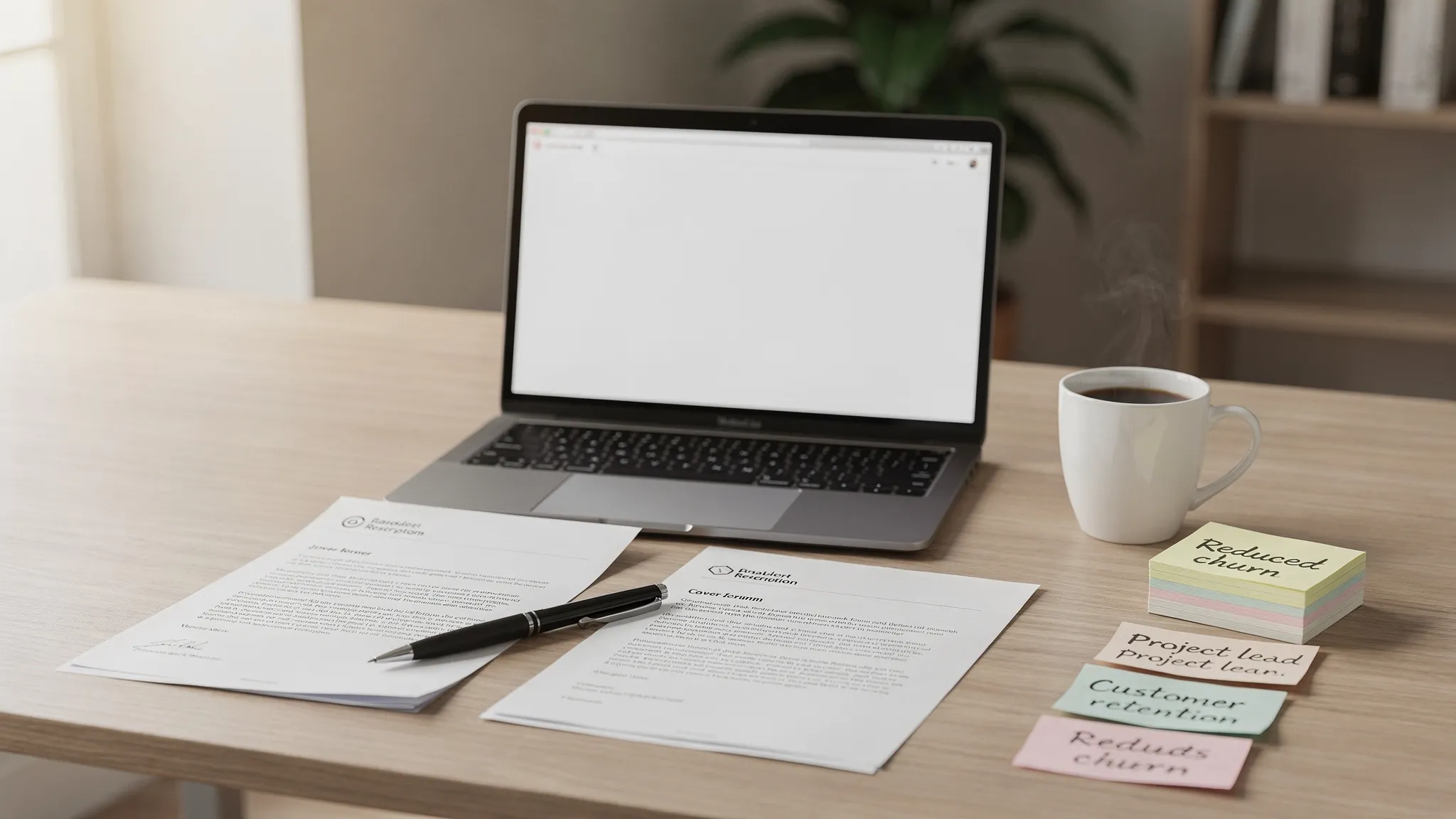
Tips for a Cover Letter Hiring Managers Notice
Get practical tips for a cover letter hiring managers notice, from stronger openings to proof points, formatting, and fast personalization.
Write your cover letter — not a blank template
Generate a finished cover letter with your details, tone, and language in ~30 seconds. Free first letter, no credit card — beats copy-pasting and filling the blanks yourself.
A cover letter gets noticed when it makes the hiring decision easier. Not louder. Not longer. Easier.
Hiring managers are usually scanning for a simple answer: does this person understand the role, have proof they can do the work, and sound like someone worth interviewing? The best tips for a cover letter all come back to that one goal. Make your fit obvious in the first few seconds, then back it up with specific evidence.
What hiring managers actually notice
A strong cover letter is not a summary of your resume. It is a short argument for why your experience matters for this specific job.
That matters because a cover letter is also a sample of your communication judgment. The National Association of Colleges and Employers lists communication, professionalism, critical thinking, and career management among key career readiness competencies. A concise, targeted cover letter can demonstrate several of those at once.
Here is what hiring managers tend to notice quickly:
| What they notice | Weak signal | Strong signal |
|---|---|---|
| Role understanding | You repeat the job title | You name the role’s real priorities |
| Proof of fit | You say you are hardworking | You show a relevant result, project, or example |
| Motivation | You praise the company vaguely | You connect your interest to a specific team, product, mission, or challenge |
| Judgment | The letter is long and unfocused | The letter is brief, skimmable, and selective |
| Voice | It sounds copied from a template | It sounds professional, specific, and human |
Start with the job posting, not a blank page
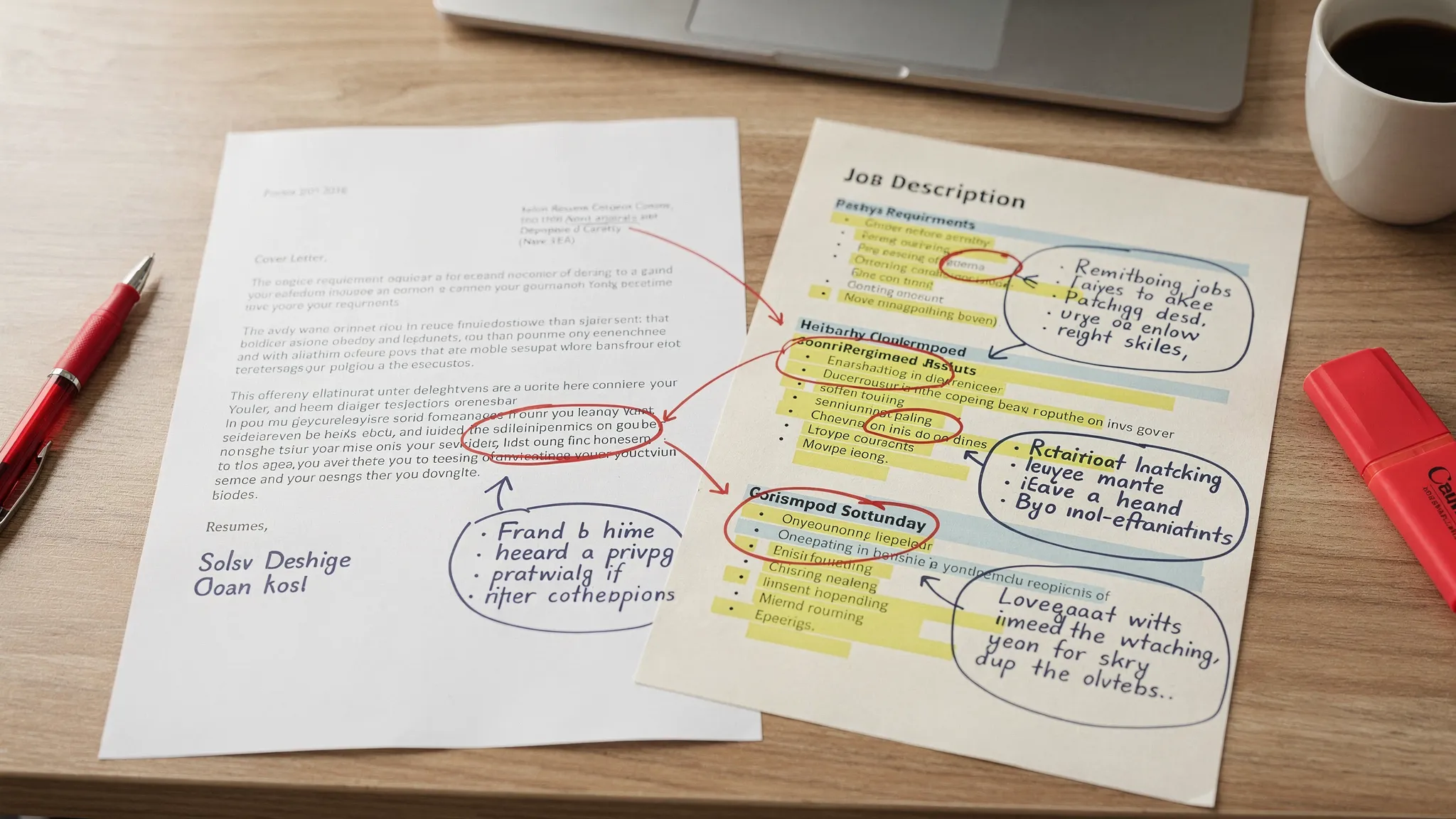
Before you write a single sentence, treat the job posting like a scoring rubric. Hiring teams often write postings around the problems they need solved. Your cover letter should answer those problems directly.
Pull out three things before drafting:
- The top two responsibilities mentioned in the posting.
- The required skill or experience that appears most important.
- One proof point from your background that matches the role.
- One company-specific reason you are interested.
This prevents the most common cover letter mistake: writing about yourself in general terms instead of writing about yourself in relation to the role.
For example, if the job emphasizes customer retention, do not lead with every customer service duty you have ever held. Lead with the part of your background that proves you can keep customers satisfied, reduce churn, improve response time, or solve recurring issues.
Replace the generic opening with a specific hook
The first sentence decides whether the rest feels worth reading. Avoid openings that simply announce your application. The hiring manager already knows you are applying.
Weak: I am writing to apply for the Marketing Coordinator position at your company.
Stronger: Your Marketing Coordinator role stood out because it combines campaign execution, analytics, and content coordination, the same mix I used to support a product launch that increased qualified demo requests by 22%.
The stronger version works because it does three things immediately. It names the role, identifies what matters in the job, and gives evidence that the candidate has done related work.
If you do not have a number, use context instead:
Stronger: Your Administrative Assistant role stood out because it requires calendar management, vendor communication, and careful follow-through, responsibilities I handled daily while supporting a five-person leadership team.
Specificity beats enthusiasm. Enthusiasm helps, but only after the hiring manager can see relevance.
Turn resume claims into proof
Your resume lists what you did. Your cover letter should explain why one or two of those experiences make you a strong fit.
A simple formula works well:
In [situation], I did [action], which led to [result or impact].
That formula keeps your writing focused and prevents vague claims like strong communicator, team player, or detail-oriented professional. Those qualities are useful, but they are more convincing when shown through a concrete example.
| Instead of saying | Prove it with |
|---|---|
| I am detail-oriented | An error you prevented, a process you improved, or a report you managed accurately |
| I am a strong communicator | A cross-functional project, client interaction, presentation, or written deliverable |
| I learn quickly | A new tool, process, or industry you mastered under time pressure |
| I am a leader | A team you guided, a decision you owned, or a result you helped others achieve |
| I am organized | A schedule, workflow, event, case load, or system you managed |
If possible, include one measurable result. Metrics can include revenue, time saved, customer satisfaction, volume handled, accuracy, retention, response time, cost reduction, or project completion.
But numbers are not the only proof. If you are early in your career, proof can come from coursework, internships, volunteer work, certifications, student leadership, freelance projects, or personal projects. The key is to make the connection clear.
Write to the hiring manager’s worries
A hiring manager is not only asking whether you want the job. They are asking whether choosing you reduces risk.
Most cover letters should answer four unspoken concerns:
- Can you do the work?
- Do you understand what this role requires?
- Will you communicate clearly with the team?
- Are you applying intentionally, or sending the same letter everywhere?
This is why the best cover letters are selective. You do not need to prove every skill in the posting. You need to prove the most important ones.
For a project manager role, one story about coordinating timelines, stakeholders, and blockers may be more persuasive than a paragraph listing ten tools. For a customer support role, one example of calming an escalated customer and improving a process may do more than repeating that you are people-focused.
Personalize without sounding fake
Personalization does not mean writing a long paragraph about how much you admire the company. It means showing that you know why this role, at this company, makes sense for you.
A useful company-specific sentence connects one fact about the employer to one fact about your background.
Weak: I have always admired your company and would be honored to join your team.
Stronger: I was drawn to your focus on expanding self-service support because my recent work involved rewriting help center content and reducing repeat tickets on common account issues.
That sentence is not flattery. It is relevance.
Good personalization can come from the company website, job description, product page, recent announcement, values page, customer segment, or industry challenge. Keep it short. One specific sentence is usually enough.
Keep the tone confident, not desperate
Hiring managers notice tone. A cover letter that sounds overly formal can feel stiff. A letter that sounds too casual can feel careless. A letter that sounds desperate can weaken your position.
Aim for clear, direct, and warm.
Avoid phrases like:
- I would do anything for this opportunity.
- I know I may not be the best candidate, but...
- Please give me a chance.
- I have no experience, but I am very passionate.
Try stronger alternatives:
- I am confident my experience in client communication and process improvement would help your team deliver faster support.
- While my background is in retail operations, the role’s emphasis on scheduling, team coordination, and customer experience closely matches my strongest experience.
- I would welcome the opportunity to discuss how my background can support your team’s goals.
Confidence is not arrogance. It is simply making a clear case without apologizing for your candidacy.
Make the letter easy to skim
Even a well-written cover letter can be ignored if it looks dense. Hiring managers are busy, and many applications are reviewed quickly. Your formatting should help them find the most important details without effort.
For most job applications, aim for 250 to 400 words. Use three or four short paragraphs. Keep the layout simple and left-aligned. Avoid decorative templates that make the text harder to read or copy into an applicant tracking system.
If you are sending the letter as an attachment, use a clean business-letter format. If you are sending it in an email body, keep the header minimal and put the strongest content near the top. For layout details, see this guide to the cover letter format hiring managers expect.
A good skim test is simple: if someone reads only the first sentence of each paragraph, can they still understand why you are a strong fit? If not, tighten the structure.
Address special situations briefly
If you are changing careers, returning after a gap, or applying after a layoff, do not let that context dominate the letter. Hiring managers notice how you frame challenges. Keep explanations short, neutral, and forward-looking.
| Situation | Better approach |
|---|---|
| Career change | Lead with transferable skills and relevant proof |
| Employment gap | Mention it only if needed, then pivot to readiness |
| Layoff | Use one neutral sentence if the gap is obvious |
| Entry-level applicant | Highlight projects, internships, coursework, and initiative |
| Overqualified candidate | Explain why this role genuinely fits your goals now |
For example:
Career change: My background in hospitality has given me strong experience in customer communication, scheduling, and problem-solving, skills I am excited to apply in your client success role.
Employment gap: After a planned career break, I am now ready to return to a full-time operations role and bring my experience in vendor coordination and workflow improvement to your team.
The point is not to hide context. It is to avoid making the letter about the obstacle instead of the value you bring.
Close with a useful next step
A strong closing should be polite, confident, and brief. Do not repeat your entire case. Reinforce your fit and invite the next conversation.
Weak: Thank you for reading my application. I hope to hear back from you soon.
Stronger: I would welcome the opportunity to discuss how my experience improving onboarding workflows and coordinating cross-functional teams can support your operations goals.
That closing reminds the hiring manager why the conversation is worth having.
Use AI for speed, then add human detail
AI can help you move from a blank page to a structured draft quickly, but the final letter still needs your real experience. The problem is not using AI. The problem is sending a letter that could belong to anyone.
A good AI-assisted workflow looks like this: generate a draft, add a real achievement, insert one company-specific detail, adjust the tone, and read it aloud before sending.
With CraftMyLetter, you can generate a personalized cover letter in under 30 seconds by filling in a few details. The tool supports 65+ letter types, multiple tone options, 5 languages, PDF export, copy to clipboard, and letter history tracking. It is free to try with no credit card required, and it uses simple pricing tiers instead of subscriptions.
If you already have a rough draft, you can also use a template to sharpen it. This customizable cover letter template is useful when you want a fast structure but still want to write the details yourself.
Quick pre-send checklist
Before you submit, review your cover letter like a hiring manager would. Look for relevance, clarity, and proof.
| Check | Why it matters | Quick fix |
|---|---|---|
| The opening names the role and value | It shows immediate relevance | Replace generic introductions with a role-specific hook |
| At least one proof point is concrete | Evidence is more persuasive than adjectives | Add a result, project, metric, or example |
| The company detail is specific | It shows intentional application | Mention a product, goal, team focus, or job requirement |
| The letter is not a resume repeat | Repetition wastes attention | Explain why one or two experiences matter |
| The tone sounds natural | Stiff writing feels generic | Read it aloud and simplify awkward phrases |
| The letter is easy to skim | Busy readers need fast clarity | Use short paragraphs and keep it under one page |
If your letter passes those checks, it is far more likely to be noticed for the right reasons.
Frequently Asked Questions
Do hiring managers still read cover letters? Some do, some skim, and some only read them for shortlisted candidates. A tailored cover letter is still valuable because it can explain fit, motivation, career changes, gaps, and achievements that your resume alone may not make clear.
What is the most important tip for a cover letter? Make it specific to the job. A hiring manager should be able to tell, within the first few lines, that you understand the role and have relevant evidence to offer.
How long should a cover letter be? Most cover letters should be about 250 to 400 words. Shorter can work for email applications, while longer letters are only useful when the role requires detailed selection criteria or a more formal application.
Should I address the hiring manager by name? Yes, if the name is clearly available and you are confident it is correct. If not, Dear Hiring Manager is acceptable. Avoid guessing or using outdated greetings like To Whom It May Concern.
Can I use AI to write my cover letter? Yes, as long as you personalize the draft. Add your real achievements, match the job posting, include one company-specific detail, and edit the tone so it sounds like you.
Create a cover letter hiring managers can remember
A noticed cover letter is not the fanciest one. It is the clearest one. It shows the role you understand, the proof you bring, and the reason this specific opportunity makes sense.
If you want a polished first draft without staring at a blank page, try CraftMyLetter. Generate a professional, personalized cover letter in under 30 seconds, then customize it with your strongest proof before you apply.
Write your cover letter — not a blank template
Generate a finished cover letter with your details, tone, and language in ~30 seconds. Free first letter, no credit card — beats copy-pasting and filling the blanks yourself.