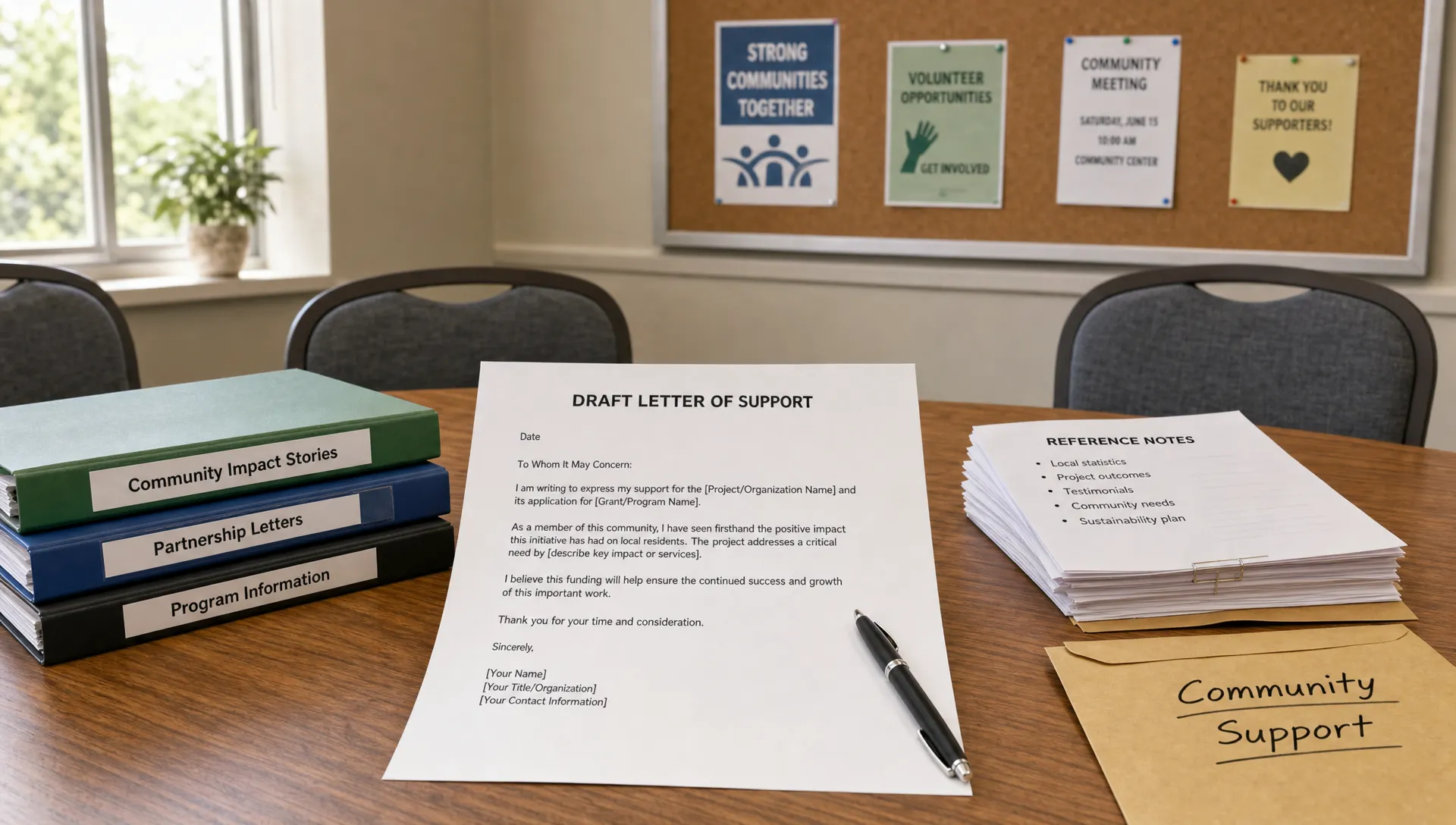
How to Write a Letter of Support That Actually Helps
Learn how to write a letter of support with proof, structure, tone tips, and examples that make your endorsement more credible.
Write your supporting letter — not a blank template
Generate a finished supporting letter with your details, tone, and language in ~30 seconds. Free first letter, no credit card — beats copy-pasting and filling the blanks yourself.
A letter of support is not supposed to be a polite formality. It should make a decision easier.
Whether you are supporting someone’s scholarship application, immigration request, housing appeal, grant proposal, job opportunity, legal statement, or community nomination, the reader is usually asking one question: Does this letter give me credible reasons to say yes?
That is the difference between a nice letter and a useful one. A nice letter says, “Alex is hardworking and deserves this.” A useful letter explains how you know Alex, what you have personally observed, why those facts matter, and what the recipient can confidently take from your perspective.
If you need to write a letter of support that actually helps, start by thinking less like a fan and more like a witness. Your role is to provide relevant, believable evidence in a professional tone.
What a letter of support is really for
A letter of support is a written endorsement that strengthens another person’s application, request, claim, or proposal. It can come from an employer, teacher, colleague, mentor, community leader, client, neighbor, doctor, or anyone with a meaningful connection to the person or cause.
The purpose is not always to “recommend” someone in the traditional sense. A recommendation letter usually evaluates a person’s qualifications for a role or program. A support letter may do that, but it can also confirm circumstances, explain hardship, validate character, document community impact, or show that a proposal has real backing.
For example, a nonprofit applying for a grant may include letters from partner organizations. A tenant appealing a housing decision may submit a support letter from a caseworker. A student applying for financial aid may ask a teacher to explain not only academic performance, but also resilience and need.
If you want a broader overview of structure and use cases, this guide to writing a supporting letter with a template is a helpful companion. This article goes a step further by focusing on what makes the letter persuasive, specific, and useful to the decision-maker.
The three things every helpful support letter must prove
A strong support letter does not need to be long. It does need to answer three questions clearly.
First, who are you and why should the reader trust your view? Your role, relationship, and length of connection matter. A vague endorsement from someone important is often less useful than a specific statement from someone who has directly observed the person’s work, conduct, or circumstances.
Second, what exactly are you supporting? Name the application, request, program, appeal, position, project, or outcome. A generic “I support this person” can feel detached from the actual decision.
Third, what evidence can you provide? The most helpful letters include concrete examples, dates when relevant, observed behavior, measurable results, or firsthand context. You do not need dramatic language. You need facts that support your conclusion.
A simple test: after reading your letter, could the recipient repeat one or two specific reasons your support matters? If not, the letter is probably too vague.
Before you write, get the right information
Many weak support letters fail before the first sentence because the writer does not know enough about the request. Ask for context before drafting, especially if the letter will be submitted to an institution, employer, committee, government office, or court.
Useful details include:
- The recipient’s name, organization, and submission instructions
- The exact opportunity, application, appeal, or request being supported
- The deadline and preferred format
- The qualities, criteria, or facts the decision-maker cares about
- Any documents you should review, such as a resume, project summary, personal statement, or case explanation
- Any topics you should avoid because they are private, irrelevant, or unsupported
This does not mean the applicant should write the letter for you. It means you should understand the purpose well enough to write something accurate and targeted.
If the recipient has formatting expectations, follow them closely. For layout guidance, including what belongs in each section, review this breakdown of supporting letter format and what to include.
A practical structure for a letter of support
Most letters of support can follow a five-part structure. This keeps the message focused and makes it easy for the reader to find the information they need.
1. Open with a clear statement of support
Do not make the reader guess why you are writing. The first paragraph should identify the person, project, or request you support and state your relationship to it.
For example:
I am writing to express my strong support for Jordan Lee’s application to the Community Health Leadership Scholarship. I have supervised Jordan for two years at Eastside Clinic, where they have served as a volunteer patient navigator.
This opening works because it gives the recipient the purpose, the person, the context, and the writer’s basis for knowledge in two sentences.
2. Establish your credibility without making the letter about you
You should briefly explain who you are and why your perspective is relevant. Keep this concise. The goal is not to showcase your resume, but to show the reader that you are in a position to provide reliable insight.
A teacher might mention the class taught and how long they have known the student. A manager might mention direct supervision. A community leader might mention collaboration on a project. A medical or social service professional should be especially careful to share only information they are authorized and qualified to discuss.
3. Provide specific evidence
This is where most letters either become useful or fade into generic praise. Replace broad claims with observed examples.
Instead of writing, “She is very responsible,” write, “During the spring food drive, Maria coordinated a team of 12 volunteers, created the delivery schedule, and personally followed up with families whose addresses had changed.”
Instead of writing, “He has overcome many challenges,” write, “After his father’s hospitalization in October, Daniel maintained his coursework while taking on additional caregiving responsibilities at home. I observed him communicate proactively about deadlines and complete all major assignments.”
The second version gives the reader something to evaluate.
4. Connect the evidence to the decision
A support letter should not simply list nice facts. It should explain why those facts matter for the request.
If the letter supports a scholarship, connect examples to academic promise, leadership, financial need, or community contribution. If it supports a grant, connect examples to capacity, credibility, and expected impact. If it supports an appeal, connect facts to the specific issue under review.
This is the persuasion step. You are helping the recipient understand how your evidence supports the decision they are being asked to make.
5. End with a confident, appropriate recommendation
The closing should restate support clearly and offer contact information if appropriate. Avoid pressure, emotional exaggeration, or statements you cannot substantiate.
A strong closing might read:
Based on my direct experience working with Jordan, I believe they have the discipline, compassion, and leadership potential this scholarship is designed to encourage. I respectfully recommend their application for your serious consideration and would be happy to provide additional information if needed.
Weak support vs. strong support
The table below shows how small changes can make a letter more credible and useful.
| Letter element | Weak version | Stronger version |
|---|---|---|
| Relationship | “I know Taylor well.” | “I have supervised Taylor for 18 months in their role as a part-time administrative assistant.” |
| Praise | “Taylor is amazing and hardworking.” | “Taylor regularly handled time-sensitive client intake forms with accuracy, even during our busiest enrollment period.” |
| Evidence | “They have leadership skills.” | “They trained three new volunteers and created a checklist that reduced missed follow-ups.” |
| Relevance | “They deserve this opportunity.” | “These examples show the organization, reliability, and service mindset required for your fellowship.” |
| Closing | “Please approve this.” | “I strongly support Taylor’s application and believe they meet the criteria described in your program guidelines.” |
Notice that the stronger version is not necessarily longer. It is simply more precise.
What kind of evidence should you include?
The best evidence depends on the situation, but it should usually be firsthand, relevant, and proportionate. Firsthand evidence is something you personally observed or can reasonably confirm. Relevant evidence connects to the decision. Proportionate evidence does not overstate the case.
For a student, you might discuss academic growth, leadership, persistence, or contribution to the classroom. For an employee, you might mention reliability, judgment, communication, performance, or teamwork. For a community member, you might describe volunteer work, caregiving, advocacy, or neighborhood impact.
For a proposal or organization, focus on credibility and feasibility. Explain what the project aims to do, why you believe it matters, and what experience or partnerships show the applicant can carry it out.
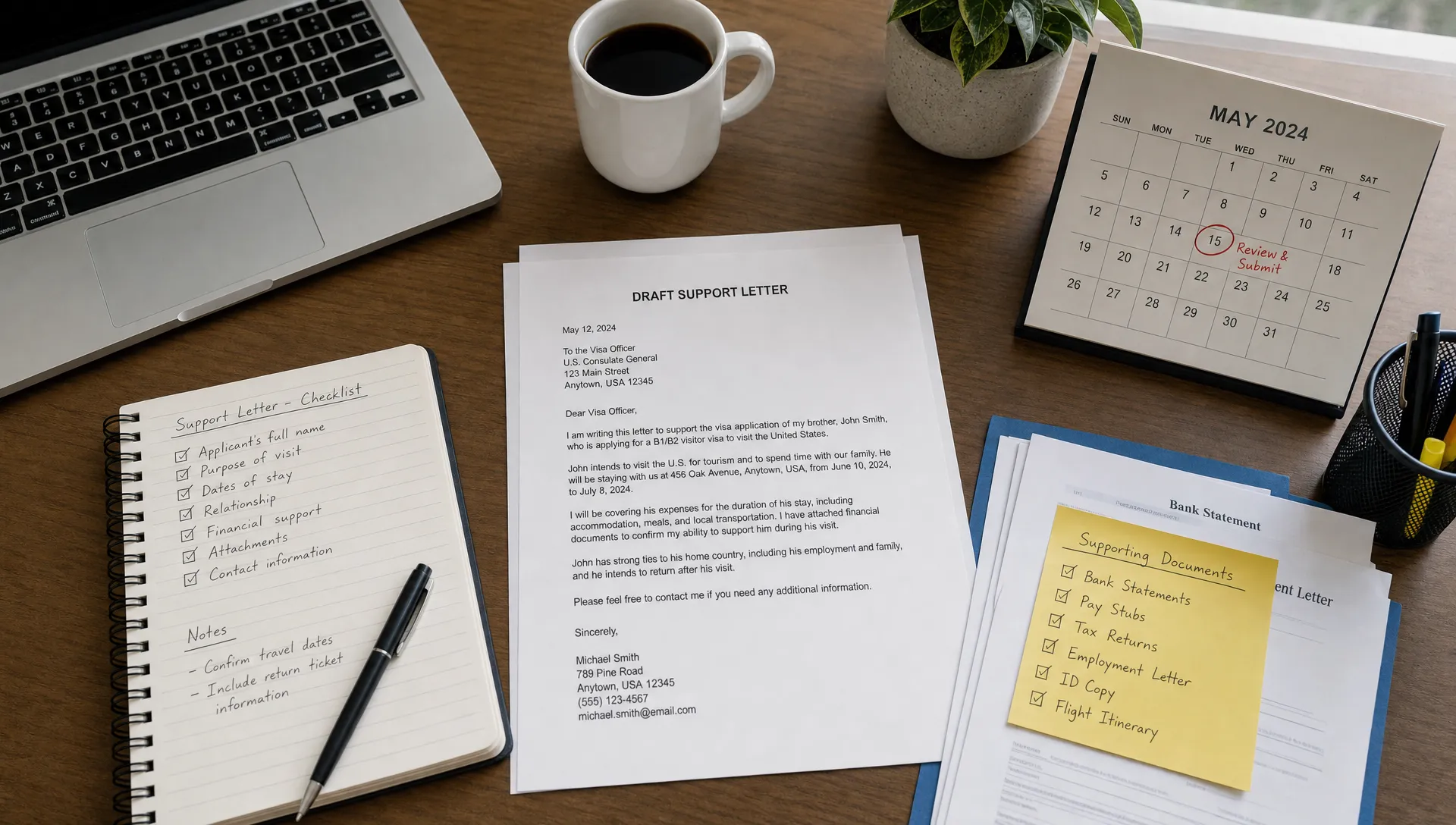
When the situation involves hardship, immigration, housing, healthcare, or legal matters, be especially careful. Do not guess, diagnose, exaggerate, or include private details without permission. If the letter may be used in a legal or official process, the person requesting it should confirm the requirements with the appropriate professional or agency.
How to adapt the letter to different situations
A helpful letter of support is tailored to the decision-maker. The tone and evidence for a scholarship committee will differ from the evidence for a housing appeal or grant review.
| Situation | What the reader likely needs | Useful evidence to include |
|---|---|---|
| Scholarship or academic application | Promise, character, fit, need, achievement | Academic growth, leadership, service, resilience, specific accomplishments |
| Grant or project proposal | Credibility, community need, feasibility, impact | Prior collaboration, community benefit, organizational capacity, expected outcomes |
| Job, internship, or professional opportunity | Work habits, skills, reliability, fit | Direct supervision, performance examples, communication, initiative |
| Immigration or visa-related support | Relationship, character, circumstances, community ties | How you know the person, consistent observations, family or community involvement |
| Housing, financial, or hardship appeal | Context, credibility, impact of the decision | Verified circumstances, responsible behavior, consequences, support plan |
| Legal or court-related support | Truthful character or factual observations | Only facts you know firsthand, respectful tone, compliance with instructions |
This table is not a substitute for official instructions. Always follow the recipient’s requirements first.
Tone matters more than you think
A support letter should sound sincere, professional, and calm. Overly emotional language can backfire, especially in formal settings. The goal is not to overwhelm the reader with adjectives. The goal is to build trust.
Use confident phrases such as “I have observed,” “In my experience,” “I can speak to,” and “I believe this demonstrates.” Avoid phrases that sound absolute unless you can fully support them, such as “the best candidate ever,” “guaranteed to succeed,” or “without question deserves approval.”
Also avoid copying a template too closely. Templates are useful for structure, but the details must be personal. A committee or reviewer can often spot a generic letter immediately.
Common mistakes that make a letter less helpful
One of the most common mistakes is writing a character summary instead of a decision-focused letter. “Kind, hardworking, and dedicated” may be true, but it is not enough by itself.
Another mistake is failing to identify the relationship. The reader needs to know whether you are a direct supervisor, longtime neighbor, professor, family friend, client, or partner organization. That context changes how the letter is read.
Writers also weaken letters by including unsupported claims. If you did not personally observe something, make that clear or leave it out. A letter that seems exaggerated can hurt the person you are trying to help.
Finally, many letters end too softly. “I hope this helps” is polite, but not very persuasive. A better ending states your support directly and ties it back to the request.
A short example of a letter of support
Here is a concise example you can adapt. The details are intentionally specific because specificity is what makes the letter useful.
Dear Scholarship Committee,
I am writing to express my strong support for Maya Thompson’s application for the Future Leaders Scholarship. I have taught Maya in AP Environmental Science for the past academic year and have also advised the student sustainability club, where she serves as project coordinator.
Maya stands out for her combination of academic discipline and practical leadership. In class, she consistently connects scientific concepts to real community issues. For her final research project, she analyzed food waste patterns in our cafeteria, collected survey responses from 126 students, and presented realistic recommendations to school administrators.
Her leadership outside the classroom has been equally impressive. Maya coordinated a composting pilot program with 15 student volunteers and worked with custodial staff to create a process that was realistic for daily use. When the first plan proved too time-consuming, she listened to feedback, revised the schedule, and kept the project moving forward.
These examples show the initiative, persistence, and community focus that your scholarship is designed to support. Based on my direct experience with Maya, I believe she will make strong use of this opportunity and continue contributing meaningfully to environmental work.
I respectfully recommend Maya for your consideration. Please feel free to contact me if additional information would be helpful.
Sincerely,
[Name]
This sample works because it is focused, credible, and connected to the scholarship’s likely criteria. It does not try to say everything. It says the right things clearly.
Should you use AI to draft a letter of support?
AI can be useful when you know what you want to say but need help organizing it professionally. It can help you turn notes into a clear structure, adjust tone, shorten a draft, or create a polished version for a formal recipient.
The key is to provide accurate details and review the output carefully. AI should not invent achievements, relationships, dates, hardship details, or credentials. The strongest letters still come from your real knowledge and honest observations.
If you want a faster starting point, LetterCraft AI can generate professional, personalized letters for many scenarios, including support-related letters. You provide the key details, choose the tone, and can export or copy the result for review. It is especially helpful when you need a polished draft quickly but still want to personalize the evidence before sending.
Quick checklist before sending
Before you submit the letter, read it once as the recipient. Ask yourself whether the letter would help you make a decision.
Check that your letter includes:
- A clear statement of support
- Your relationship to the person, organization, or request
- Specific examples or firsthand observations
- A direct connection between the evidence and the decision
- A professional tone without exaggeration
- Correct names, dates, titles, and submission details
- Contact information, if appropriate
If any of these pieces are missing, revise before sending. A thoughtful extra 10 minutes can make the letter much more useful.
Frequently Asked Questions
How long should a letter of support be? Most letters of support are one page, usually three to five focused paragraphs. The letter should be long enough to provide context and evidence, but short enough for a busy reviewer to read quickly.
Who should write a letter of support? The best writer is someone with relevant firsthand knowledge. That could be a supervisor, teacher, mentor, colleague, community leader, partner organization, caseworker, or another person who can speak credibly about the request.
Can a family member write a letter of support? Yes, if the situation allows it and the family member can provide relevant information. However, some applications prefer non-family references, so always check the instructions.
What should I avoid in a letter of support? Avoid vague praise, exaggeration, private details shared without permission, unsupported claims, and emotional pressure. Do not include facts you cannot verify or statements that go beyond your role.
Is a letter of support the same as a recommendation letter? Not always. A recommendation letter usually evaluates a person for a job, program, or opportunity. A letter of support may also validate a request, confirm circumstances, endorse a project, or show community backing.
Need to draft a strong support letter quickly?
A helpful support letter is clear, specific, and honest. It shows why your perspective matters, what you have observed, and how those facts support the decision being made.
If you are short on time, LetterCraft AI can help you create a polished first draft in under 30 seconds. Add the key details, choose the tone that fits your situation, and refine the result with your own examples before sending.
Write your supporting letter — not a blank template
Generate a finished supporting letter with your details, tone, and language in ~30 seconds. Free first letter, no credit card — beats copy-pasting and filling the blanks yourself.